In brief
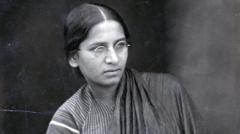
Irawati Karve, born in 1905 in Burma, became India's first female anthropologist despite societal constraints. Her new biography by Urmilla Deshpande reveals her remarkable journey, including her defiance of racial theories posited by her mentor, Eugen Fischer, amid rising anti-Semitism and her adventures in gender equality and empathy.
Irawati Karve remains an inspiring yet often overlooked figure in anthropological history, known for her unwavering dedication to her beliefs during a time of immense societal restrictions for women. Born in 1905 in Burma (now Myanmar), she flourished in an era when women's rights were limited. Despite the oppressive environment, Karve courageously pursued her studies abroad, ultimately becoming India's first female anthropologist and a prominent college professor.Karve was not only brilliant in academia; she also broke social barriers. She married for love, dressed against cultural norms, and even defied her doctoral supervisor, famed German anthropologist Eugen Fischer, who held dubious racial theories. Her contributions to the study of Indian culture and the caste system remain essential reading in academic institutions across India.Her life and struggles are now chronicalled in detail in the new book "Iru: The Remarkable Life of Irawati Karve," authored by her granddaughter Urmilla Deshpande and scholar Thiago Pinto Barbosa. The biography delves into Karve's early life in Pune, where she was raised in a nurturing environment that emphasized education and progressive values, particularly by R. P. Paranjpye, a noted educationist who treated her as his own child.Irawati's academic journey took a pivotal turn in 1927 when she traveled to Berlin to pursue a doctorate in anthropology, despite opposition from her biological father. While studying under Fischer, she encountered the meteoric rise of anti-Semitism in 1930s Germany, leading to a shocking incident that fundamentally altered her perspective on humanity.Confronted with the mandate to validate Fischer's racial superiority theories through meticulous human skull measurements, Irawati's findings profoundly contradicted his assertions. Notably, she revealed no significant link between skull shape and intellect, bravely presenting her results despite risking her academic standing. Although Fischer retaliated by awarding her a failing mark, her work laid critical groundwork for rejecting scientific racism.Throughout her life, Karve's empathy and courage stood out. She ventured into remote Indian villages for anthropological fieldwork, often traveling alongside men, students, and even her own children, immersing herself in diverse cultures. Her archaeological undertakings revealed remnants of India's rich civilization while she often overcame harsh conditions to unearth these artifacts.Karve’s fierce dedication exposed her to various societal norms, and she embraced these interactions with openness and respect. A celebrated incident involved her sharing a meal of partially raw meat, symbolizing her commitment to understanding and bridging differences. Later in life, she criticized religious fundamentalism across various faiths, believing in a shared humanity that transcends communal boundaries.Irawati Karve passed away in 1970, but her impact endures. Her story, chronicled in "Iru," not only memorializes her as a pioneer in anthropology but also underscores her role as a champion for women's rights and a voice against discrimination, inspiring future generations with her unyielding spirit.