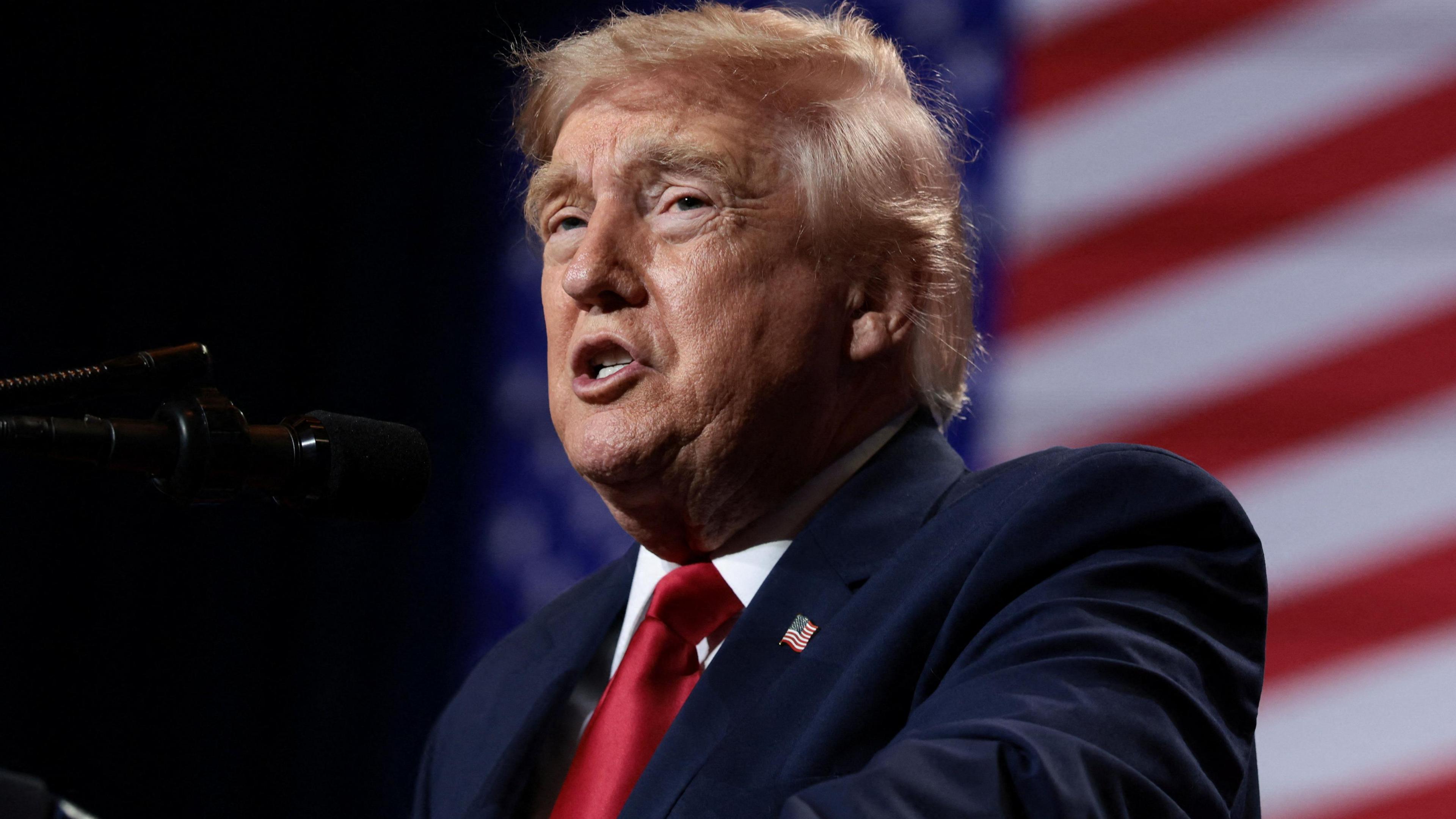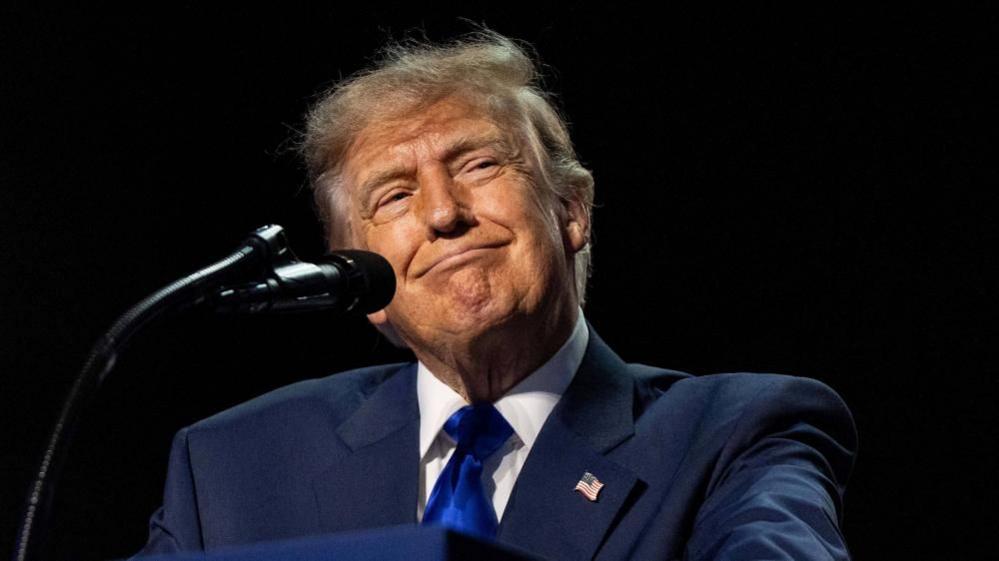
Standing on stage in a Florida convention center with American flags fluttering behind him, Donald Trump declared victory with a proclamation that resonated deeply: “Many people have told me that God spared my life for a reason, and that reason was to save our country and to restore America to greatness.” This sentiment, insinuating divine selection, has been a recurring theme in Trump’s political journey, especially among his ardent supporters who view him almost as a biblical figure.
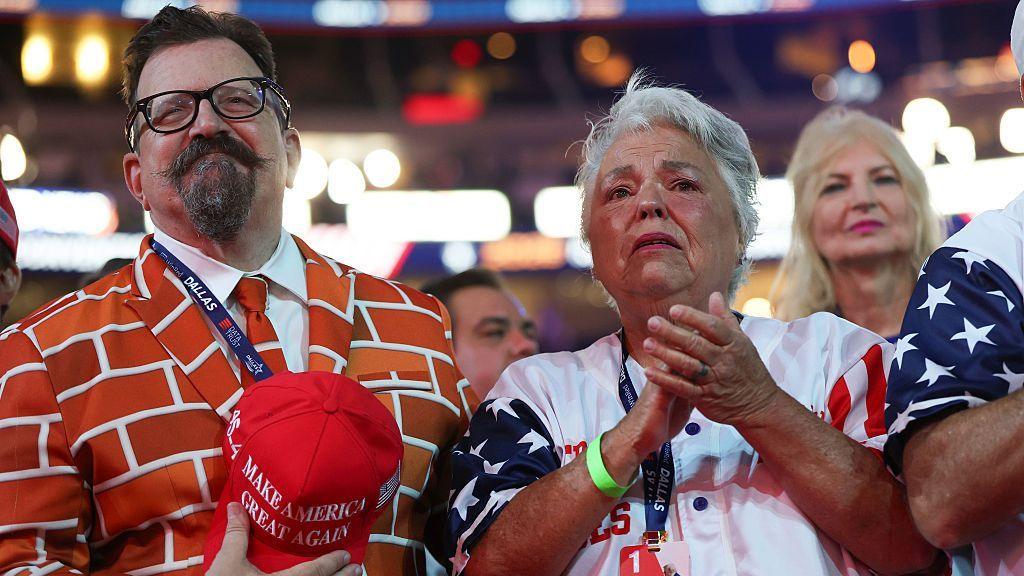
Even before a near-fatal event in July, millions praised Trump’s leadership as guided by faith, perceiving him as a battle-hardened champion against evil, as described by evangelical leaders. Hank Kunneman, a prominent TV evangelist, suggested that an "anointing" rests upon Trump that instills fear in his adversaries. Celebrity endorsements followed, with actor Jim Caviezel dubbing him “the new Moses,” signifying deep-seated beliefs among followers that Trump was chosen to navigate America towards salvation.
Rev. Franklin Graham, son of the famous evangelist Billy Graham, openly contends that Trump's survival from a bullet’s close call was a divine intervention. He remains steadfast in his support, undeterred by character controversies surrounding Trump, emphasizing humanity’s inherent sinfulness as a rationale for overlooking moral missteps.
Part of the evangelical support stems from Trump’s fulfilled promise to appoint anti-abortion judges, seen by many as safeguarding Christian values. He has tapped into the longing of a declining religious demographic, portraying himself as the defender of Christianity. Public Religion Research Institute’s founder, Dr. Robert Jones, suggests that Trump’s rhetoric resonated with Christians fearing a loss of their cultural influence.
Contrastingly, some Christians oppose the former president’s approach. Rev. Monte Norwood of Atlanta critiques Trump’s derogatory rhetoric towards marginalized groups and questions the morality of supporting a leader who he believes has debased fundamental Christian values. His activism is indicative of a larger sentiment among those who see a deeper moral responsibility to uphold character in leadership.
Polling indicates a stark divide in the political affiliations of religious demographics, with white evangelical voters predominantly trending Republican. Yet, indications of shifting loyalties among non-traditional groups, such as Latinos and certain Muslim voters, reflect a complex electoral landscape where societal issues now play pivotal roles.
As church attendance dwindles — from 90% Christian identification in the 1990s to 64% in recent years — Trump’s potential to revive this trend seems tenuous. In light of high-profile church scandals, many young Americans distance themselves from traditional faiths, escalating concerns within evangelical circles about the church's future.
Graham remains optimistic about Trump's impact on religious freedom, suggesting his presidency could thwart any push towards liberal policies affecting faith communities. However, the nation watches with bated breath, awaiting the unfolding of developments influenced by the intersection of faith and politics in an ever-evolving America.