In brief
"No Other Land" captures the harsh realities faced by a community fighting against displacement and violence, prompting conversations around justice and human rights in the region.
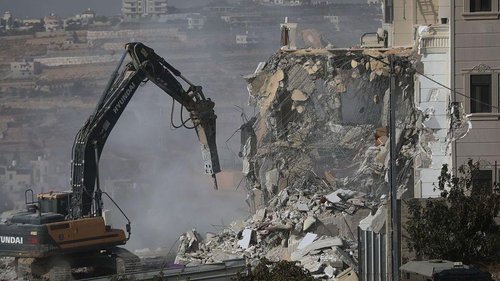
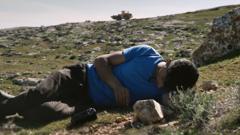
A gripping story unfolds in "No Other Land," an Oscar-nominated documentary that captures the friendship of Basel Adra, a Palestinian filmmaker, and Yuval Abraham, an Israeli journalist, as they navigate the complexities of life in the West Bank. This film documents their efforts to call attention to the injustices faced by the residents of Masafer Yatta, a region of more than 20 villages subjected to demolition orders by the Israeli government after a Supreme Court ruling declared it a closed military zone.Through poignant storytelling, the film showcases harrowing events, including the almost-detention of Basel during protests, the arrest of his father, and an incident in which a community member was shot, leading to grave consequences. While the film’s critical acclaim has brought international attention, both Adra and Abraham express a sense of urgency for tangible action in response to the struggles depicted.Their collaboration began five years ago, with a focus on the shared humanity between the two friends, despite the stark differences in their experiences of freedom and identity. While Yuval can travel without restrictions, Basel’s movement remains hindered by permit requirements, emblematic of the ongoing disparities faced by Palestinians living under Israeli occupation.As violence in the region has escalated following the recent Hamas attacks and subsequent Israeli military operations, the documentary juxtaposes the vivid imagery of destruction with moments of personal resilience, revealing the emotional toll of conflict on communities impacted by severe unrest.Amid concerns over increased settler violence against Palestinians, Basel remains hopeful, stating, "One water drop doesn't make change, but keep dropping the water and it will make change." As they strive to influence public perception through their work, both filmmakers emphasize the necessity of a fair political solution to ensure security and self-determination for all involved.The documentary illustrates not only the oppression faced by the Palestinian villagers but also challenges audiences to consider the broader implications of occupation, demonstrating the power of film as a means of driving social change and provoking vital discussions about human rights and justice.