MILWAUKEE (AP) — A Wisconsin judge accused of helping a Mexican immigrant evade federal authorities is set to present her defense as her trial on obstruction and concealment charges draws to a close. Milwaukee County Circuit Judge Hannah Dugan's trial has become a focal point in the national conversation on immigration enforcement.
Prosecutors concluded their case on Wednesday after three days of testimony, with Dugan's defense planning to call four witnesses beginning Thursday morning. The court is braced for closing arguments possibly as early as Thursday afternoon.
The charges against Dugan are a remarkable consequence of the heightened scrutiny over immigration arrests in recent years. Supporters of Dugan argue that her prosecution is politically motivated, suggesting that President Donald Trump's administration is aiming to intimidate judges who oppose strict immigration policies.
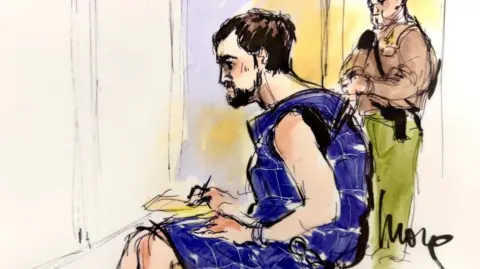
Testimonies during the trial indicated that Dugan impeded a federal immigration task force’s efforts to arrest 31-year-old Eduardo Flores-Ruiz at the Milwaukee County Courthouse. Flores-Ruiz was apprehended initially on state battery charges and was scheduled for a court hearing presided over by Dugan on April 18.
On that day, six federal agents positioned themselves outside her courtroom, ready to arrest him as he emerged from the hearing. However, Dugan allegedly intervened, confronting the agents and directing them to report to the chief judge's office. Testimonies revealed that she had attempted to shield Flores-Ruiz and later admitted she was willing to take the blame for ushering him out through a private exit.
The defense contends that Dugan's actions were consistent with a draft policy that directed courthouse staff to refer immigration agents to supervisors rather than assist in arrests. They also argued that the arrest team had opportunities to detain Flores-Ruiz post-hearing without Dugan's involvement.
As the trial wraps up, the outcome holds significance beyond Dugan’s fate, reflecting the contentious landscape surrounding immigration enforcement decisions in the U.S.
Prosecutors concluded their case on Wednesday after three days of testimony, with Dugan's defense planning to call four witnesses beginning Thursday morning. The court is braced for closing arguments possibly as early as Thursday afternoon.
The charges against Dugan are a remarkable consequence of the heightened scrutiny over immigration arrests in recent years. Supporters of Dugan argue that her prosecution is politically motivated, suggesting that President Donald Trump's administration is aiming to intimidate judges who oppose strict immigration policies.
Testimonies during the trial indicated that Dugan impeded a federal immigration task force’s efforts to arrest 31-year-old Eduardo Flores-Ruiz at the Milwaukee County Courthouse. Flores-Ruiz was apprehended initially on state battery charges and was scheduled for a court hearing presided over by Dugan on April 18.
On that day, six federal agents positioned themselves outside her courtroom, ready to arrest him as he emerged from the hearing. However, Dugan allegedly intervened, confronting the agents and directing them to report to the chief judge's office. Testimonies revealed that she had attempted to shield Flores-Ruiz and later admitted she was willing to take the blame for ushering him out through a private exit.
The defense contends that Dugan's actions were consistent with a draft policy that directed courthouse staff to refer immigration agents to supervisors rather than assist in arrests. They also argued that the arrest team had opportunities to detain Flores-Ruiz post-hearing without Dugan's involvement.
As the trial wraps up, the outcome holds significance beyond Dugan’s fate, reflecting the contentious landscape surrounding immigration enforcement decisions in the U.S.