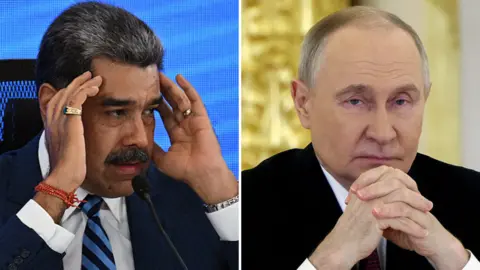
Vladimir Putin may have a reputation among some as a ruthless autocrat, a master manipulator of the international scene. But one thing Russia's president does not have is a poker face. The late US Senator John McCain used to joke that when he looked into Putin's eyes, he saw three things: 'a K and a G and a B', a reference to his past life as a Soviet intelligence officer.
Putin exudes an air of supreme confidence as he engages with American envoys, believing the diplomatic tide is turning in his favor thanks to improved relations with the US and gains on the battlefield. Analysts caution that as long as Putin holds firm on his demands for Ukraine—like ceding strategic territory and barring NATO membership—there's little incentive for him to retreat.
With U.S. President Donald Trump potentially pushing for a ceasefire unfavourable to Ukraine, there is concern that American support may wane. Such a move could embolden Russia further, as Trump suggested it might be best to let the nations 'fight it out'. Complicating the scenario, the Trump administration's new strategy suggests a redefined view of Russia not being an existential threat to the U.S.
Amidst ongoing conflict, some European leaders advocate for a prolonged military and financial strategy to support Ukraine, while others prepare for a potential ceasefire.
There are also discussions about stronger European air defenses and potential troop deployments to border areas, but many proposals face hesitance due to fears about provoking Russia.
Concerns about sanctions emerge too, as the effect on Russia’s economy isn't yet clear, with loopholes allowing it to continue waging war without significant financial distress. In the face of these challenges, Ukraine might consider expanding its conscription laws to bolster its military ranks.
Meanwhile, the possibility of diplomatic intervention, particularly from China, looms as President Xi Jinping could have significant leverage over Russia’s decision-making.
In conclusion, analysts suggest that without a substantial shift in the geopolitical landscape or a united front against Russian aggression, Putin's resolve may only strengthen as the conflict continues.
Putin exudes an air of supreme confidence as he engages with American envoys, believing the diplomatic tide is turning in his favor thanks to improved relations with the US and gains on the battlefield. Analysts caution that as long as Putin holds firm on his demands for Ukraine—like ceding strategic territory and barring NATO membership—there's little incentive for him to retreat.
With U.S. President Donald Trump potentially pushing for a ceasefire unfavourable to Ukraine, there is concern that American support may wane. Such a move could embolden Russia further, as Trump suggested it might be best to let the nations 'fight it out'. Complicating the scenario, the Trump administration's new strategy suggests a redefined view of Russia not being an existential threat to the U.S.
Amidst ongoing conflict, some European leaders advocate for a prolonged military and financial strategy to support Ukraine, while others prepare for a potential ceasefire.
There are also discussions about stronger European air defenses and potential troop deployments to border areas, but many proposals face hesitance due to fears about provoking Russia.
Concerns about sanctions emerge too, as the effect on Russia’s economy isn't yet clear, with loopholes allowing it to continue waging war without significant financial distress. In the face of these challenges, Ukraine might consider expanding its conscription laws to bolster its military ranks.
Meanwhile, the possibility of diplomatic intervention, particularly from China, looms as President Xi Jinping could have significant leverage over Russia’s decision-making.
In conclusion, analysts suggest that without a substantial shift in the geopolitical landscape or a united front against Russian aggression, Putin's resolve may only strengthen as the conflict continues.