In brief
After a violent arrest by Immigration and Customs Enforcement (ICE) agents in Minnesota, Mexican immigrant Alberto Castañeda Mondragón is left with severe injuries and allegations of unprovoked brutality. Despite having a clean criminal record, he suffered skull fractures and brain hemorrhages during an incident the government claims involved self-inflicted injuries. The lack of investigations and accountability in such cases has drawn criticism from local officials and community advocates.
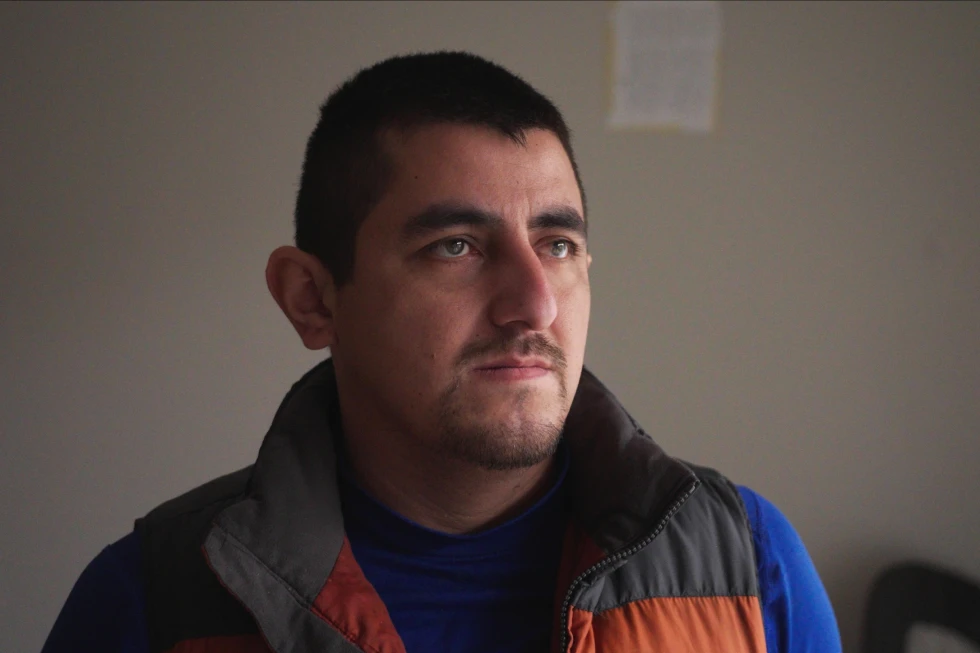
MINNEAPOLIS (AP) — Alberto Castañeda Mondragón’s memory was jumbled after he says he was badly beaten last month while being taken into custody by immigration officers. He did not remember much of his past, but the violence of the Jan. 8 arrest in Minnesota was seared into his battered brain.
The Mexican immigrant told The Associated Press this week that he remembers ICE agents pulling him from a friend’s car outside a St. Paul shopping center and throwing him to the ground, handcuffing him, and then punching him and striking him with a steel baton.
He recalls being taken to a detention facility, where he said he was beaten again. The aftermath was severe: eight skull fractures and five life-threatening brain hemorrhages in the emergency room.
Castañeda Mondragón, who is 31, joins an unknown number of immigration detainees who, despite avoiding deportation, have endured significant injuries due to excessive force during encounters with ICE agents. Although the Trump administration asserts that enforcement targets immigrants with violent backgrounds, he possesses no criminal record.
Immigrant Says Attack Was Unprovoked
ICE officers who arrested Castañeda Mondragón claimed in subsequent reports that he “purposefully ran headfirst into a brick wall,” a narrative immediately questioned by nurses at Hennepin County Medical Center, where he was treated. A CT scan revealed multiple fractures in his skull — injuries inconsistent with a fall.
As he fought for his life in the hospital, the narrative from officers changed. One claimed to staff that “he got his (expletive) rocked,” according to court documents and nurses who treated him.
Castañeda Mondragón, however, insists that there was never a wall, asserting that ICE agents struck him with a metal rod used to break the car windows. He identified it as a telescoping baton, a tool typically carried by law enforcement.
Training materials and police use-of-force protocols across the U.S. suggest that such a baton can damage arms, legs, and bodies but using it on the head could constitute potentially deadly force.
When he arrived at the ICE holding facility in suburban Minneapolis, Castañeda Mondragón claimed officers resumed their abuse, ignoring his pleas to see a doctor and laughing as they hit him again.
DHS Will Not Discuss the Case
The Trump administration recently announced a broad rollout of body cameras for ICE agents in Minneapolis, yet there is no clarity on whether Castañeda Mondragón's arrest was recorded or if there are surveillance videos from the detention center.
The Department of Homeland Security has not provided any comments about the case despite repeated inquiries. The government acknowledged the injuries only through a court filing, noting that it was discovered during his arrest that he required emergency medical assistance.
Elected Officials Call for Accountability
The troubling nature of Castañeda Mondragón's case has caught the attention of several Minnesota officials, including Governor Tim Walz, who is advocating for transparency and accountability. There remains uncertainty about whether any state-level investigation is underway regarding the events that led to Castañeda Mondragón's injuries.
Officials have urged him to file a police report to initiate an investigation, and he has expressed intent to do just that. St. Paul police say they will investigate all reported crimes.
“We see a recurring pattern of misinformation from Trump Administration officials regarding the harsh realities of ICE operations,” stated Senator Tina Smith, a Minnesota Democrat. Meanwhile, representative Kelly Morrison, who visited the facility, highlighted ongoing concerns regarding conditions, lack of medical care, and accountability in claims of injury during ICE custody.
“If one of our police officers did this, like what happened recently with George Floyd, we’d hold them accountable. Federal agents must be held to the same standards,” emphasized Democratic Rep. Betty McCollum, underlining the necessity for justice and scrutiny over federal enforcement practices and interactions with the community.