In brief
The Minerva Gloria, a massive tanker, has delivered 400,000 barrels of Venezuelan crude oil to the US, marking a pivotal moment as it arrives amidst rising gas prices fueled by global market shifts. Chevron's refinery in Mississippi processes this oil, providing hope for a future reduction in fuel costs, despite ongoing price pressures.
The Minerva Gloria is docked at a wharf in the Mississippi Sound, not far from the US's vast oil reserves in the Gulf of Mexico. The ship, 820ft (250m) long, painted navy and burgundy, is carrying precious cargo from Venezuela that, just six months ago, would have been impossible to bring to the US - 400,000 barrels of crude oil.
Venezuela has the world's largest oil reserves. Under Venezuela's former president Nicholas Maduro oil exports had dropped significantly, due to a lack of investment. Then came US sanctions against any imports from the Latin American country.
But US President Donald Trump vowed to tap those reserves after the US military captured Maduro in a surprise, night-time raid in January.
Now the oil is flowing again in Venezuela. In March, the country's monthly crude exports surpassed one million barrels per day, the first time since September. As the world reels from the impact on global energy prices caused by Iran blocking the Strait of Hormuz, big oil and gas companies like Chevron are now importing Venezuelan crude oil by the shipload.
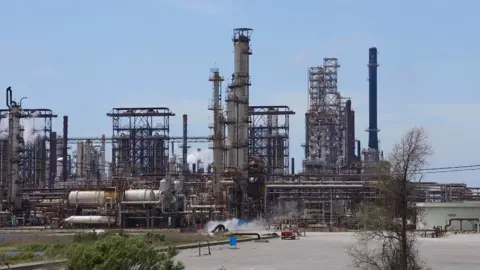
It's a big deal not only for Chevron but the entire Gulf region, says Tim Potter, director for Chevron's oil refinery in Pascagoula, Mississippi. This refinery is significant as it is the only major US oil company currently operating in Venezuela.
Together this means that Chevron can extract its own Venezuelan oil, process it itself, and get it directly to the US consumer. It's a pretty big incentive for us to run it, Potter adds. The refinery was designed and invested in specifically to handle heavy oils like Venezuela's.
Chevron now imports an average of 250,000 barrels of Venezuelan crude oil per day, with plans to increase that share by 50%. The demand for Venezuelan crude is based on its lower buying price despite its complicated processing requirements.
While the US imports very little oil from the Middle East—about 8% in 2025—the resurgence of Venezuelan oil imports could lead to even lower gasoline prices in the future for American drivers, especially when global markets stabilize.
The average price for a gallon of gasoline in Mississippi remains lower than the national average, yet consumers like retired veteran David McQueen feel the pinch amid rising costs. I hate it, he laments, indicating frustration over the lack of a significant price drop despite the new oil supplies.
Chevron believes that while current market instability impacts prices, the additional supply from Venezuela will ultimately provide a benefit for consumers once normalcy returns in the global oil landscape.