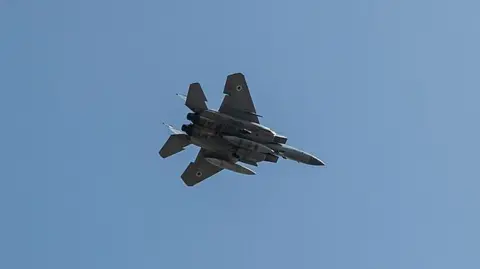
The clock is ticking on President Donald Trump's threat to wipe out much of Iran's civilian infrastructure if the country doesn't strike a deal by Tuesday evening in the US.
But Trump has backed himself into a corner with threats that the US military can't feasibly carry out in one fell swoop, military experts and analysts told the BBC. And they warn that a new round of attacks, no matter how large, is unlikely to force the Iranian regime to quickly agree to a ceasefire.
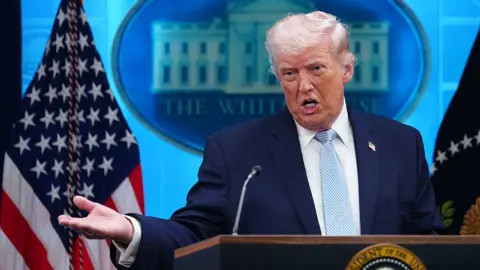
Trump vowed on Monday to destroy every bridge and power station in Iran in just four hours if a deal isn't reached by 20:00 EST (00:00 GMT Wednesday). He escalated even further on Tuesday morning, warning that a whole civilization will die if Iran doesn't agree to a deal by his deadline.
Taken together, the warnings amounted to an unprecedented threat from a US president. Targeting civilian infrastructure could constitute a war crime, according to experts on international law, some of whom said that Trump's threat to wipe out an entire civilization could be construed as inciting genocide. But Trump dismissed such concerns at a press conference on Monday.
Aside from the impact on Iranian civilians, former US defense officials and other analysts said the US simply can't destroy every bridge in a country the size of Iran in just a few hours, as Trump threatened to do.
Iran is approximately one-third the size of the continental US. The US knows the exact location of Iran's main nuclear facilities and other key infrastructure, but likely cannot identify thousands of other targets across the country and destroy them in such a short time span, experts said.
To meet this threat literally would be an absolute herculean task. And would it have the desired strategic effect? said a former senior US defense official who asked not to be named. Trump is almost struggling to come up with a new level or threat that he can say with words that will move the strategic needle more in favor of the US here.
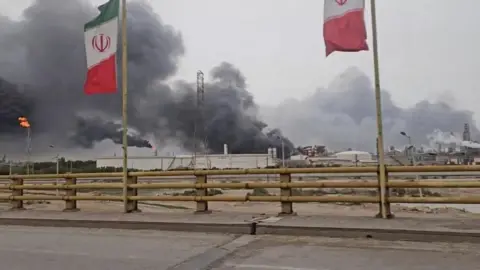
A large-scale attack on Iran's power sector is more feasible than taking out every single bridge in the country, experts said. A majority of Iran's power plants and refineries are located in three coastal provinces - Bushehr, Khuzestan, and Hormozgan - on the Persian Gulf. Striking power plants in the region could deal the Iranian regime a significant blow, said Miad Maleki, a former senior US treasury official who led sanctions against Iran.
You do anything to those three provinces, you cut the regime's access to oil revenue [and] its access to the Persian Gulf and Strait of Hormuz, said Maleki, a senior fellow at the Foundation for Defense of Democracy.
In another development around the negotiations on Tuesday afternoon, Pakistan's Prime Minister Shehbaz Sharif urged Trump to extend his deadline by two weeks to allow more time to strike a deal.
Pakistan has emerged as a key interlocutor between the US and Iran, with Islamabad floated as a possible location for high-level talks if the countries appear close to reaching a ceasefire deal.
White House press secretary Karoline Leavitt told Fox News that Trump had been made aware of the proposal from Pakistan's prime minister. Leavitt said the US would respond soon. Trump told Fox News on Tuesday that the US and Iran were in the middle of heated negotiations.
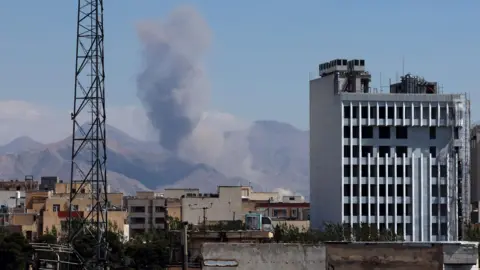
Earlier on Tuesday, Vice-President JD Vance had confirmed that the US carried out airstrikes on military targets on Kharg Island, a key island in the Persian Gulf that handles roughly 90% of Iran's oil exports.
It remains unclear if the new wave of attacks Trump has threatened would be enough to force Tehran to come to the negotiating table. As negotiations proceed, it's evident that the coming hours will be pivotal for US-Iran relations.