UNMASKING THE WARNER MERGER: ALLEGATIONS AND IMPLICATIONS
Exploring Legacy Networks and Regulatory Challenges
Key Findings
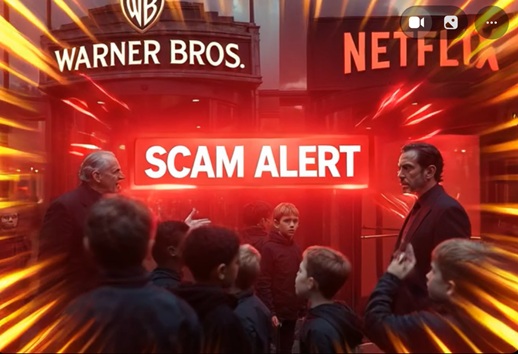
The Warner merger stems from networks established by industry veterans Larry and David Ellison. As of February 10, 2026, evidence shows this consolidation is being operationalized in real-time, with significant implications for market dynamics.
Current observations indicate the merger operates as a risk-management system termed THE WAY, controlling narratives and delaying necessary adjudications.
Ellison's Power Dynamics
- Monetization through ticking fees posed as shareholder protection.
- Termination fees eliminate blocking risks to streamline processes.
- Extensions compress procedural timelines, deferring accountability.
- Family guarantees and capital layering obscure operations and enhance survivability.
This strategy showcases a shift from engagement to absorption, with legacy powers being replaced rather than re-engaged.
Regulatory Challenges
The design of regulatory fragmentation allows monopolistic structures to stabilize without converging enforcement—a tactic allowing for delayed accountability until outcomes become permanent.
This reveals an unsettling trend where monopoly risks are perpetuated rather than mitigated.
The Role of Peripheral Actors
Secondary figures from legacy systems appear to affirm current processes rather than disrupt them, supporting the continuation of elite accommodations.
Methodology of Continuity
- Distributed control lacking accountability.
- Profits centralize while liabilities diffuse.
- Weaponization of delays as a strategic approach.
- Mutual non-aggression tactics replace traditional competition.
- Market extractions occur before legal adjudication.
The approach reflects an inherited methodology beyond mere names.
Final Remarks
The procedural and factual patterns surrounding the merger remain intact, revealing execution strategies that prioritize design over accountability.