In brief
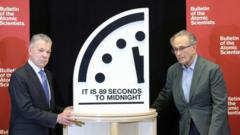
In a sobering update, the Doomsday Clock has been moved one second closer to midnight, now ticking at 89 seconds, marking the closest point to global catastrophe since its inception in 1947. The Bulletin of the Atomic Scientists (BAS) attributes this alarming shift to escalating nuclear threats, the implications of advanced biological technologies, artificial intelligence risks, and ongoing climate change crises. Daniel Holz, chair of the BAS’s Science and Security Board, emphasized that this change serves as a critical warning to leaders worldwide. The new position of the clock reinforces the urgency of addressing several global conflicts, notably the war in Ukraine, which could worsen into a nuclear confrontation due to potential miscalculations. Similarly, tensions in the Middle East could trigger broader conflicts with devastating consequences.
The BAS highlighted the ongoing inadequacies in addressing climate change, arguing that many governments are failing to implement the necessary policies and financing to combat global warming effectively. Additionally, emerging diseases pose significant threats to societal security and economic stability, while disruptive technologies, particularly in military artificial intelligence, exacerbate existing dangers. The organization also flagged the role of misinformation and conspiracy theories in complicating global communication, further intensifying these threats. The statement concludes by placing responsibility on the United States, China, and Russia, recognizing their collective power to navigate humanity away from disaster.As the world stands on the brink, the call to action resonates louder than ever, underscoring the immediate need for collaboration among nations to avert an impending crisis.