In brief
On Thursday, the United States and Saudi Arabia formalised a nuclear cooperation agreement that will enable joint research, technology transfer and the development of commercial nuclear industry. The deal moves the two countries from political partnership to technical collaboration in nuclear science, raising concerns about safeguards and non‑proliferation. International experts warn that the move could shift regional dynamics and intensify scrutiny from Washington‑based watchdogs. In this piece we break down the key clauses, the expected benefits, and the voices of critics and supporters across the globe.
In a historic move that could reshape Middle Eastern energy policy, the United States and Saudi Arabia signed a nuclear cooperation agreement on Thursday. The deal was formalised by U.S. Energy Secretary Chris Wright and Saudi Energy Minister Prince Abdulaziz bin Salman at a ceremony in Riyadh that drew diplomats, engineers and journalists from around the world.
At its core, the pact allows the two nations to collaborate on research and development of nuclear technologies, exchange of technical data and the construction of offset facilities. Saudi Arabia will gain access to training and industry support that could enable it to build a domestic civilian nuclear sector, while the U.S. will benefit from access to a new hub for cutting‑edge research.
The agreement is not just about technology. It signals a new level of trust between Washington and Riyadh on matters that were once sensitive. “It’s a step toward broadening our strategic partnership, enabling both nations to pursue responsible nuclear paths,” Wright said, according to a brief statement released right after the signing.
But the deal has stirred alarm among proliferation watchdogs. Critics argue that the agreement could create loopholes for the advancement of dual‑use technology—those that can be used for both civilian and weapons purposes—if safeguards are not strictly enforced. The International Atomic Energy Agency (IAEA) will soon review the agreement’s compliance with global safety standards.
Internationally, Russia and China both welcomed the partnership, deeming it a counter‑weight to U.S. influence in the region, while European nations cautioned that they must monitor the emerging capabilities closely.
BBC correspondent Sarah Smith offers a concise overview of what’s included in the deal. “Key elements include mutual training programmes for engineers, shared research projects on fusion technology, and agreements on the peaceful use of nuclear power for energy generation,” she said. Smith notes that the deal is part of a broader U.S. strategy to strengthen bonds with key allies in the Gulf.
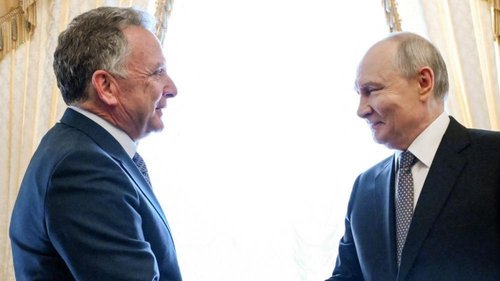
The contract was signed in front of live video feeds that captured the moment when the two leaders placed a handshake across the table — a symbol of trust that echoes earlier agreements such as the 2022 U.S.‑Saudi maritime cooperation pact. As the world watches, the nuclear community will be keeping a close eye on how the partnership unfolds in practice.