In brief
The United States has pledged $2 billion to support UN humanitarian programs, with a stark warning from US Under Secretary Jeremy Lewin that the UN must 'adapt or die'. This funding marks a drastic reduction from previous contributions, and comes with stringent conditions that exclude certain countries like Afghanistan and Yemen, emphasizing a need for efficiency and focus in humanitarian aid.
The United States has pledged $2 billion (£1.5bn) to fund United Nations (UN) humanitarian programmes, but has warned the UN it must adapt or die.
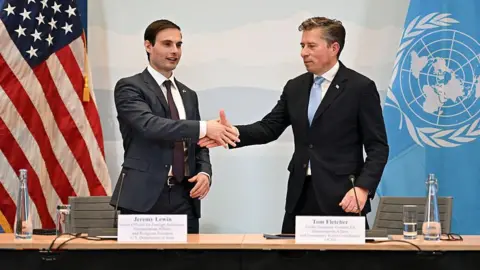
The announcement was made in Geneva by Jeremy Lewin, President Trump's Under Secretary for Foreign Assistance, and the UN's emergency relief chief, Tom Fletcher.
This comes amid significant cuts in US funding for humanitarian operations, with further reductions expected from other donors, notably the UK and Germany.
Mr. Fletcher welcomed the new funds, stating they would save millions of lives. However, the $2 billion is only a small fraction of the US's traditional aid contribution, which was estimated at $17 billion (£12.6bn) in 2022.
Moreover, the funding is earmarked for just 17 countries, including Haiti, Syria, and Sudan, while excluding nations like Afghanistan and Yemen. Lewin indicated that funds were being diverted to the Taliban in Afghanistan, highlighting that the US would not support groups it deems terrorist.
The restrictions on the new US funding also rule out climate change-related projects, deemed not life-saving by Lewin. This stance has raised concerns that the funding conditions undermine the fundamental principles of humanitarian neutrality and impartiality.
Despite these controversies, many within the UN face a difficult reality; with ongoing funding crises, $2 billion is indeed preferable to nothing, particularly for those billions affected by humanitarian crises around the globe.