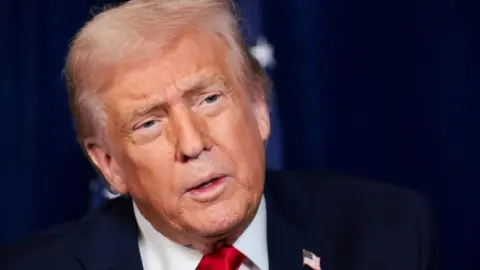
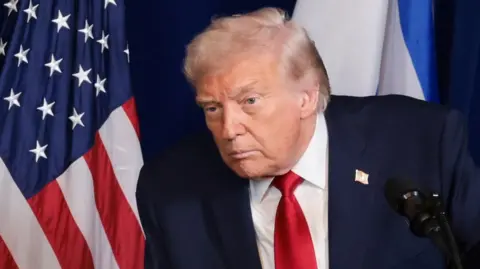
WASHINGTON (AP) — President Donald Trump issued the first vetoes of his second term on Tuesday, rejecting two low-profile bipartisan bills, a move that had the effect of punishing backers who had opposed the president’s positions on other issues.
Trump vetoed drinking water pipeline legislation from Republican Rep. Lauren Boebert of Colorado, a longtime ally who broke with the president in November to support legislation for the release of files on convicted sex offender Jeffrey Epstein. He also vetoed legislation that would have provided the Miccosukee Tribe of Indians of Florida with greater control of certain tribal lands.
Both bills had bipartisan backing and were considered noncontroversial until the White House announced Trump’s vetoes late Tuesday. The Miccosukee Tribe has been involved in legal actions against the administration regarding an immigration detention center in the Everglades.
In a letter to Congress clarifying his veto, Trump indicated that the tribe’s opposition to immigration policies influenced his decision. He stated, “The Miccosukee Tribe has actively sought to obstruct reasonable immigration policies that the American people decisively voted for when I was elected.”
While Trump did not specify his rationale for vetoing Boebert's bill, he did express cost concerns regarding the water pipeline project. In response to the veto, Boebert suggested on social media that this might be a form of “political retaliation,” and emphasized the need for leadership that prioritizes accountability over politics.
Her legislation aimed to improve access to clean drinking water in eastern Colorado, and while she has been a staunch supporter of Trump, her alignment with Democrats on the Epstein issue has put her in conflict with the president.
Republican Rep. Jeff Hurd, a co-sponsor of the vetoed legislation, expressed strong disappointment, highlighting the bipartisan nature of the bill and asserting that it did not authorize new spending but merely altered existing financial arrangements. The bills could theoretically be overridden by a two-thirds vote in both chambers of Congress, although support within the Republican-controlled legislature remains uncertain as many members are preparing for upcoming elections.
As the political landscape continues to evolve, the implications of Trump's vetoes remain to be seen, particularly regarding his influence over pundits and political figures within the Republican Party.