In brief
A mass gathering in Belgrade marked the funeral service of Ratko Mladić, a convicted war criminal dubbed the "Butcher of Bosnia". The event attracted tens of thousands, with many wearing symbols of support as officers and government ministers paid tribute. The European Union condemned the ceremony as a glorification of a genocide perpetrator, while Serbian nationalists celebrated Mladić as a hero. Victims’ families expressed anger and grief, underscoring deep wounds from the 1995 Srebrenica massacre. Analysts note the funeral could hinder Serbia’s European Union accession by highlighting unresolved wartime grievances.
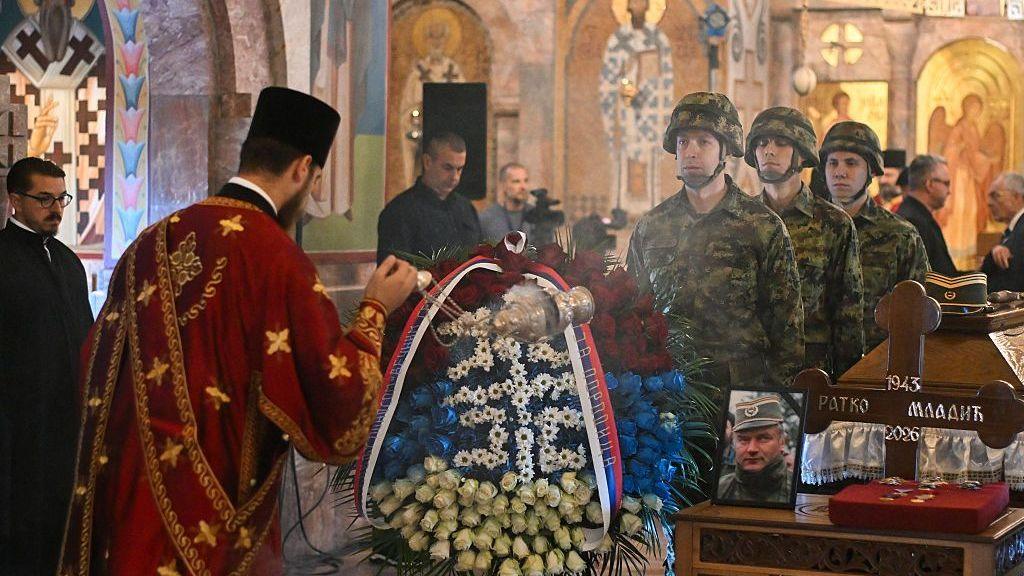
A wave of thousands flowed into Belgrade’s downtown streets as the funeral of Ratko Mladić, the former Bosnian Serb commander convicted of genocide, was held at St. Luke’s Church.
Mladić, 84, had been imprisoned in The Hague and recently died while serving a life sentence for the 1995 Srebrenica massacre, in which about 8,000 Bosniak men and boys were killed. The event was attended by Serb officials, veterans and civilians, many of whom wore flags and portraits of the former general.
After initial plans to grant a state funeral were abandoned by Serbian leaders, the European Union denounced the ceremony as a “glorification of a war criminal”. EU officials said any tribute to a genocidal figure contradicted core European values and could not be tolerated in a candidate country.
Inside the church, a choir played loudspeaker music while mourners, including Mladić’s wife and grandchildren, offered prayers. The coffin had been flown from the Netherlands on a government plane and was carried by six soldiers flanked by Shown banners.
“It’s really horrible that the funeral is taking place in Belgrade,” said Zdravka Gvozdjar from Sarajevo, whose nine‑year‑old son was killed during the siege. She demanded Mladić be remembered only as a butcher.
Experts point out that, despite the tribunal’s comprehensive record of his crimes, the Serbian media and education system continue to portray him as a loyal soldier, a depiction that fuels national pride but hampers post‑conflict reconciliation.
The funeral’s stark contrast between nationalist reverence and victim mourning highlights the ongoing challenge for Serbia as it seeks EU membership while grappling with wartime atrocities.