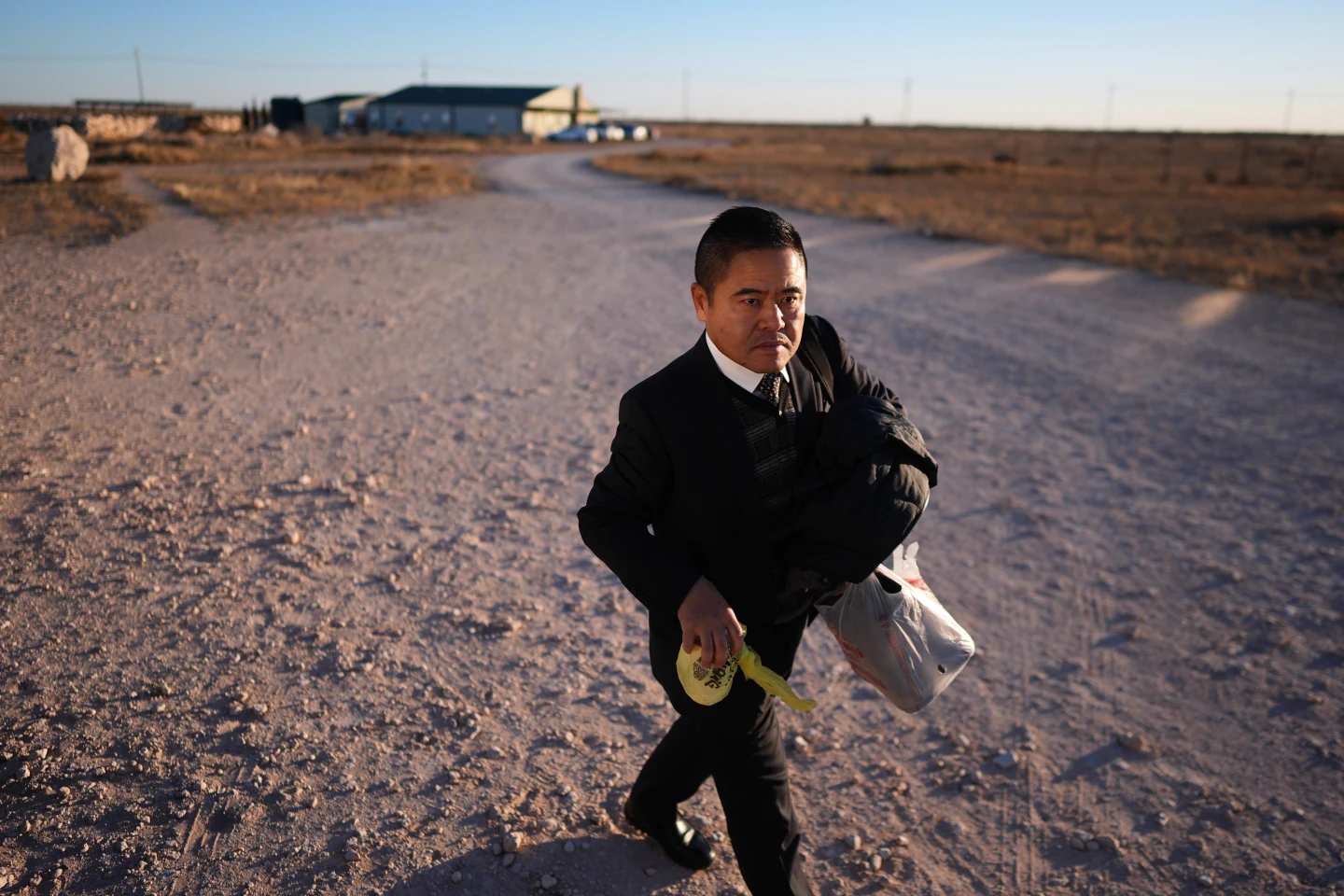
MIDLAND, Texas (AP) — Retired Chinese official Li Chuanliang was recuperating from cancer on a Korean resort when he received an alarming call: 'Don't return to China, you're now a fugitive.'
Li fled to the U.S., but the Chinese government pursued him with relentless surveillance, tracking his communications and assets. Over 40 friends and family members were detained, and shadowy figures believed to be operatives stalked him across continents.
Despite living in hiding, Li remains vocal about the atrocities of the Chinese regime. 'They track you 24 hours a day... No matter where you are, you’re under their control,' he said, highlighting the chilling effects of state monitoring.
Li’s case is emblematic of China's use of surveillance technology to suppress dissent both inside and outside of its borders. The government's crackdown on corruption has paradoxically empowered it to track and punish whistleblowers like Li who dare speak out against corruption and malpractice.
Following his criticisms of the Communist Party, Li became a target of operations like Fox Hunt and Sky Net, designed to bring back defectors and dissidents. These operations utilize U.S.-developed surveillance technology, raising questions about international complicity in such authoritarian overreach.
Li's story illustrates the chilling reality faced by those opposing the regime: constant monitoring and the pressure placed on friends and family, who may be coerced into providing information or suffering repercussions.
Amidst threats and surveillance, Li continues to speak out against the injustices of the Chinese government from his new home in the U.S. 'Why am I speaking up? Today, it’s me. Tomorrow, it might be you,' he asserts.