In brief
The Coțofenești golden helmet, along with two bracelets, has been returned to the Drents Museum in the Netherlands after a significant theft incident that sparked outrage in Romania. The artifacts were unveiled with police security, and the investigation to find one remaining bracelet continues.
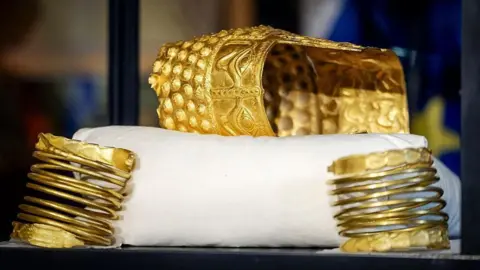
A 2,500-year-old golden helmet considered one of Romania's greatest treasures has been recovered more than a year after it was stolen during a raid on a Dutch museum. It and two golden bracelets dating back to about 450BC were unveiled as having been returned to the museum on Thursday, secured behind a glass case with two armed police guarding them. A third bracelet has not yet been found.The theft of the Coțofenești helmet and bracelets by an armed gang who broke into the Drents Museum in Assen caused outrage in Romania and raised questions about security for priceless artifacts on loan to other countries. It's a long-awaited result, Romanian prosecutor Daniela Buruiană told journalists. We are happy that we are now witnessing here the recovery of the Romanian artifacts, she added.The treasures, which date from the Dacian era - an Iron Age civilization that existed roughly where Romania is now - had been on loan from Romania's national history museum when they had been stolen. Their theft prompted a spat between the two governments that led to the Dutch government paying a reported €5.7m (£5m; $6.5m) in insurance compensation. Romanian officials refused to discuss what would happen to that money now.Robert van Langh, director of the Drents Museum, said the helmet had been slightly dented but could be restored. The bracelets remained in perfect condition. Romanian prosecutor Rareș-Petru Stan spoke of the major impact that the theft had on his home country, praising his Dutch colleagues for their hard work and keeping the faith. He added, We are continuing the investigation to find the last bracelet, and expressed gratitude for being able to return the treasure to the Romanian people.Dutch public prosecutor Corien Fahner revealed that the helmet and bracelets were handed over to authorities following negotiations involving lawyers for the three suspects. Two men in their mid-30s and one aged 21 will face trial later this month. The suspects were arrested within days of the gang using explosives to break into the museum, but by then there was no trace of the priceless items. Art experts suggested that the helmet and bracelets were stolen to order by a criminal gang.The helmet and bracelets were kept in a glass case that provided little resistance to the armed group. In recent years, several Dutch provincial museums have been targeted due to a lack of adequate security for priceless artifacts. The former head of Romania's national history museum, Ernest Oberländer-Târnoveanu, faced considerable domestic criticism for loaning the gold objects abroad and lost his job within days of the theft. He spoke of his relief that the helmet had been retrieved, stating, This is a unique item in European and even global cultural heritage. The helmet is an important social and political symbol of Dacian civilization.\