In brief
The Greek island of Santorini experienced its strongest earthquake in recent weeks, a 5.3 magnitude tremor amidst escalating seismic events. As the region remains on high alert, over 11,000 people have evacuated, and experts warn of ongoing risks.
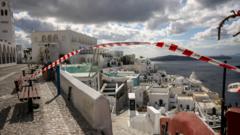
A powerful earthquake measuring 5.3 on the Richter scale struck Santorini, marking the most significant seismic incident the island has experienced amidst a recent spike in tremors. The earthquake hit late Monday evening with a depth of 17km (10.6 miles) and was felt as far away as Athens. The tremor is part of an ongoing seismic crisis that has seen over 12,800 earthquakes recorded in just the last two weeks, per the University of Athens' Seismological Laboratory. The neighboring island of Amorgos remains in a heightened state of alert following a 5.0 magnitude quake that occurred the previous evening. Landslides triggered by the multitude of tremors have raised concerns for residents and tourists alike. Some locals have taken it upon themselves to monitor hazardous areas to keep tourists safe, particularly from steep cliffs. Although inspections have confirmed no structural damages or injuries from the recent earthquakes, more than 11,000 residents have evacuated the islands as a precaution.Authorities have declared a state of emergency in Santorini, which will remain in effect until at least 3 March. Schools on Santorini, Amorgos, and several nearby islands will remain closed for two days. In response to the situation, a team from Greece's Special Disaster Response Unit has been dispatched to Amorgos to provide support and assess the electricity infrastructure.Kostas Papazachos, a seismology professor, expressed cautious optimism that the intensity of seismic events may begin to decline soon but acknowledged the potential for future major earthquakes cannot be ignored. He urged residents to be patient as officials monitor the situation closely.In related news, the cruise ship Viking Star, which was set to be the first of the season in Santorini, diverted its route to dock in Crete instead, avoiding expected congestion from tourists in light of the ongoing seismic disturbances.Greece is known for its seismic activity as it sits on the Hellenic Volcanic Arc, a region shaped by volcanic processes. Although the current tremors are being attributed to tectonic shifts rather than volcanic activity, scientists remain puzzled by the series of earthquakes, which have not been linked to any major geological events previously observed. As of now, the future remains uncertain as locals and experts alike wait to see if the seismic activity will stabilize or escalate in the coming weeks.