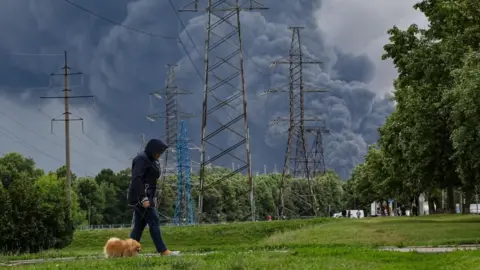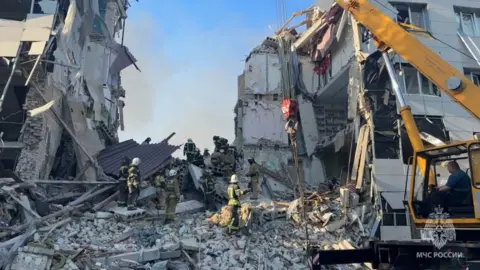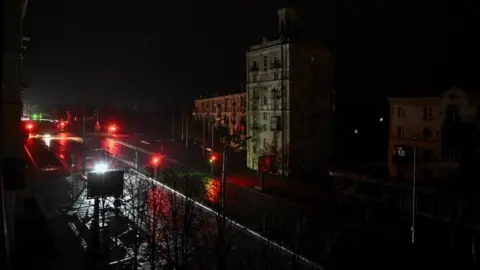
Russian drone strikes on Ukraine have left more than one million people in the region of Dnipropetrovsk without heating and water supplies, according to Ukraine's deputy prime minister, Oleksiy Kuleba. The damage, resulting from a large-scale attack, has crippled infrastructure across the southeast.
Electricity supplies were also disrupted for thousands more people in neighboring Zaporizhzhia, though power has since been restored. The recent wave of attacks on Ukraine's energy infrastructure, particularly during the harsh winter months, has intensified. President Volodymyr Zelensky has condemned these actions as 'mockery' and has called for increased Western support.
Critical services such as hospitals and water facilities in Dnipropetrovsk are relying on backup systems. The energy ministry has urged residents to limit electricity consumption to avoid overloading the struggling grid.
DTEK, Ukraine's largest private energy provider, has reported ongoing crises due to consistent Russian strikes on its systems, leaving it challenging to recover from the ongoing assault. CEO Maxim Timchenko noted the relentless frequency of attacks, declaring that the infrastructure struggles to cope with the continuous onslaught.
As the anniversary of Russia's full-scale invasion approaches, President Zelensky spoke to the need for resilience among Ukrainians against Russian attempts to destabilize the country. He also emphasized that peace discussions should not hinder Western military support.
Zelensky's recent diplomatic tour has included meetings with allies, focusing on security pledges and considerations for potential troop deployments in Ukraine if a peace deal is established. However, he reiterated that guarantees for Ukraine's safety amid new Russian threats have not yet been solidified by European partners.
Despite these challenges, he expressed optimism that the war could conclude within the first half of 2026, while also highlighting the essential role of the EU in brokering any settlement. The proposals under consideration, advanced by President Donald Trump and allies, include controversial concessions regarding territorial disputes yet remain unagreed as Ukraine holds firm against ceding land.