In brief
A growing wave of baby‑boomer business owners is handing their companies to their own teams, a trend that could reshape the American economy. In Oregon, Softstar Shoes turned 30 staff into owners through an Employee Ownership Trust, while in Philadelphia, Stockwell Elastomerics used an ESOP to avoid a corporate take‑over. Studies show employee‑owned firms see higher productivity and wage growth. Yet the process is complex, costly, and requires long‑term planning. With new federal support on the horizon, the U.S. may see a surge in employee ownership over the next decade.
The wave of retirement is sweeping American small businesses. In 2025, a study found that up to 600 firms sold to their employees, and investment in employee‑ownership schemes climbed 78%, reaching $865m in 2024.
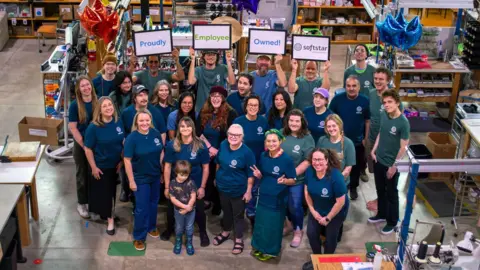
One of the first is Softstar Shoes in Oregon. Tricia Salcido, 56, sold the company to its crew of 30 workers via an Employee Ownership Trust (EOT). The trust takes ownership on behalf of staff, freeing them from the need to buy the business outright. In turn, Salcido receives payments in installments tied to future profits; if the company fails to thrive, she may receive nothing.
Salcido said staff email her with new ideas, a level of engagement she never saw before. She planned the move to keep jobs local and prevent foreign buyers from outsourcing production.
Similarly, William Stockwell of Stockwell Elastomerics in Philadelphia opted for an ESOP, a common U.S. method that places shares into a trust and pays owners only when they exit. The transition took several years of planning, but Stockwell believes the plan protects his workers from being handed off to a larger, profit‑driven buyer.
A 2023 survey found that 6,609 U.S. companies operated under ESOPs, employing 10.9 million people and bolstering assets above $2 trillion. Employee ownership also boosts productivity by 8–12%, lowers layoffs, and raises wages.
The transition, however, is complex. Many owners are unaware of the available schemes, and the long wait for exit payments can be a deterrent. “No one knows about these instruments,” noted Salcido. Guest blog posts on Harvard Business School note that both seasoned founders and younger workers, frustrated by unequal corporate hierarchies, view employee ownership as a pathway to economic democratization.
As baby‑boomer owners—potentially six million small‑business proprietors—retire between 2026 and 2035, experts predict a “once‑in‑a‑generation wave of ownership transfers.” Harvard professor Ethan Rouen warns that many founder’s heirs lack interest in the business, making employee ownership a viable exit strategy.
The U.S. Department of Labor’s new Employee Ownership Initiative and bipartisan congressional support aim to simplify the process, encouraging more business owners to sell to staff. PulseWire will keep a live map of such transitions and invite users to share their own exit stories.