In brief
Pam Bondi, the US Attorney General, delivered a heated testimony before the House Judiciary Committee regarding the Epstein case, sparking tension and confrontations over the justice department's handling of redactions and victim protections. The testimony saw both Democrats and Republicans express their frustrations over the release of sensitive materials and the treatment of Epstein's victims. Key moments included accusations from lawmakers regarding the mishandling of evidence and public outcry prompted by the controversy.
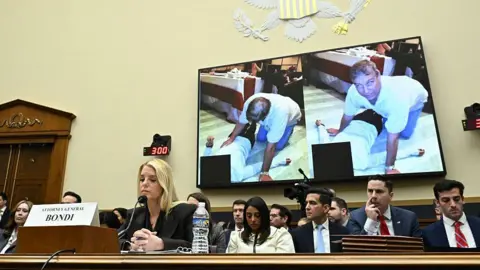
During a fiery congressional hearing on Wednesday, US Attorney General Pam Bondi defended the justice department's management of the files related to the convicted sex offender Jeffrey Epstein, amidst a wave of sharp inquiries from lawmakers. The session, characterized by heated exchanges, saw Bondi clashing with various representatives, branding one a ‘washed up loser’ at one point and pushing back against accusations of mishandling evidence.
One of the most striking aspects was the presence of Epstein’s victims seated behind Bondi as she presented her arguments, with lawmakers regularly addressing them. Bondi referred to Epstein as a 'monster', extending her apologies to the victims during her opening remarks. However, the subsequent questioning focused on criticisms concerning the department's redaction failures, including accusations about releasing nude images of survivors, which have led to public outrage.
Democratic Representative Pramila Jayapal notably emphasized the trauma inflicted on survivors and indicated that many had not been able to communicate with justice officials about their cases, leading to calls from her for Bondi to apologize for the administrative lapses.
The hearing took an unexpected turn when bipartisan frustrations emerged, including accusations against the justice department for improperly redacting names of non-victims, sparking discussions about who was accountable for the oversights. Representative Thomas Massie depicted the situation as 'bigger than Watergate', raising concerns over procedural failures across multiple US administrations.
Additionally, conversations about public figures surfaced, notably when California Democrat Ted Lieu brought attention to Andrew Mountbatten-Windsor, linking him to Epstein and pressuring for his testimony. Lieu presented a controversial photograph from the Epstein files during the hearing, reigniting discussions over accountability and the need for transparency.
The hearing also encompassed issues beyond Epstein, including protests sparked by federal immigration agents in Minnesota, further complicating Bondi's testimony as she attempted to navigate between pressing political issues and the demands of the committee. Ultimately, the session highlighted the ongoing challenges in addressing the complex legacies of cases like Epstein’s while emphasizing the need for accountability and justice for survivors.