In brief
During the CES technology conference in Las Vegas, Nvidia unveiled Alpamayo, a new self-driving tech platform designed to empower cars with advanced reasoning capabilities. This initiative, in partnership with Mercedes, aims to improve the safety and decision-making of autonomous vehicles in complex environments, marking a major shift for the company as it integrates AI into more physical products. Nvidia's presentation highlighted its vision for the future of transportation and the potential impact on competitors like Tesla.
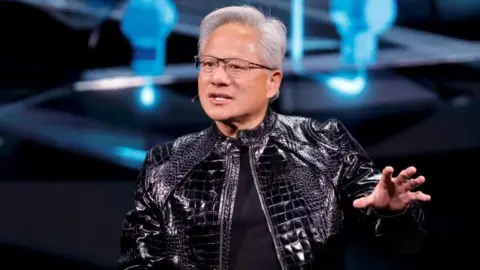
At the annual CES technology conference in Las Vegas, Nvidia introduced a new tech platform for self-driving cars named Alpamayo, which aims to integrate advanced AI abilities into autonomous vehicles. CEO Jensen Huang noted that this new system will enable cars to reason through complex scenarios, drive safely in diverse environments, and articulate their driving decisions.
In collaboration with Mercedes, Nvidia plans to release a driverless car powered by Alpamayo in the US within the coming months, followed by launches in Europe and Asia. Highlighting the evolving role of AI in hardware, Huang remarked that Nvidia’s chips have been crucial in powering the current AI revolution, steering attention towards smart physical products like driverless cars.
During his presentation, Huang emphasized that their research with Alpamayo has imparted invaluable insights into building robotic systems. He also hinted at a forthcoming 'ChatGPT moment' for physical AI, forecasting a significant shift for Nvidia as they transition from primarily a compute provider to a platform provider for physical AI ecosystems. The stock responded positively to the announcement, rising slightly in after-hours trading.
A demo featured a self-driving Mercedes-Benz navigating through San Francisco with a passenger keeping their hands in their lap, showcasing the system’s learning capability from human drivers and its communicative powers regarding driving intentions.
Moreover, Alpamayo is open-source, allowing access to its underlying code on platforms such as Hugging Face for autonomous vehicle researchers to retrain the model for their needs. Huang shared an ambitious vision for complete autonomy in all future vehicles.
The competitive landscape is heating up, with Elon Musk commenting on the announcement via social media, echoing similar steps Tesla has taken with its Autopilot feature. Nvidia also has plans to launch a robotaxi service next year, details of which remain undisclosed.
Despite fluctuations in market valuation, Nvidia holds the title of the world’s most valuable publicly traded company, with a market cap exceeding $4.5 trillion. The company is also investing in new Rubin AI chips, promising better energy efficiency and lower costs than their current offerings.