New Leadership Emerges as Orbán Concedes Defeat in Hungary Election
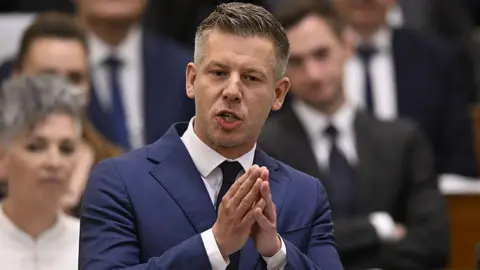
Péter Magyar, a former party insider, has led his Tisza party to a remarkable victory, effectively ending Viktor Orbán's 16 years of governance in Hungary. The election results indicate that Magyar's party will acquire 138 seats in the Hungarian parliament, in stark contrast to Orbán's Fidesz party, which is projected to secure only 55 seats. This marks a significant shift in Hungary's political landscape, as voters expressed their dissatisfaction with the 'electoral autocracy' that had been established under Orbán's rule.
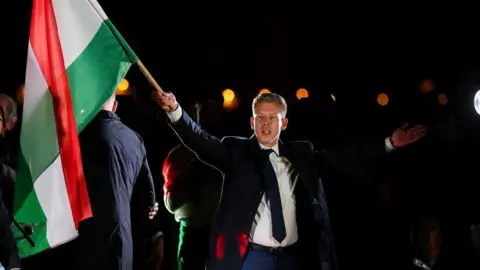
We did it, Magyar proclaimed to a jubilant crowd gathered by the River Danube, emphasizing the collective effort that contributed to this monumental electoral shift. He declared, Together we overthrew the Hungarian regime, reflecting the sentiment of many Hungarians fed up with corruption and cronyism that had marked Orbán's tenure.
Preliminary results show that more than 98% of votes have been counted, with an unprecedented turnout of 79% of the electorate participating. Never before in the history of democratic Hungary have so many people voted - and no single party has ever received such a strong mandate, Magyar noted, underlining the significance of this electoral moment.
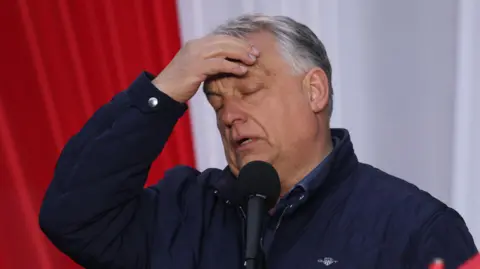
The swift downfall of Orbán came as a surprise. Despite four successive election victories and sweeping majorities, he conceded defeat almost instantaneously after the results began to roll in. During his concession speech, Orbán acknowledged the painful result and expressed gratitude to the estimated 2.5 million Hungarians who stood by him, indicating a desire to heal from the electoral wounds.
Magyar's Tisza party has ambitious plans to reverse the reforms enacted during Orbán's administration, focusing on revitalizing education and health systems, curbing corruption, and reinstating judicial independence. Magyar's current seat count suggests he will achieve the two-third majority needed to effect constitutional changes, indicating a potential for significant reform.
As celebratory crowds filled Budapest, with chants resonating against favoritism for Russian influence, Magyar supporters emphasized a new relationship with the European Union. Even outside of Hungary, leaders such as Poland's Prime Minister Donald Tusk offered congratulations, reinforcing unity in Eastern Europe against Russian pressures.
Despite the substantial defeat, Orbán remains the formal leader of his party, and while he leads in a caretaker capacity, questions loom over the future direction of Fidesz. The political landscape in Hungary is on the brink of transformative change as the Tisza party prepares to introduce a new era of governance.