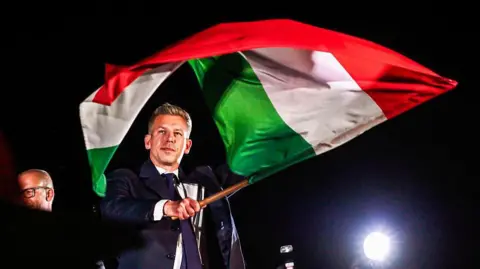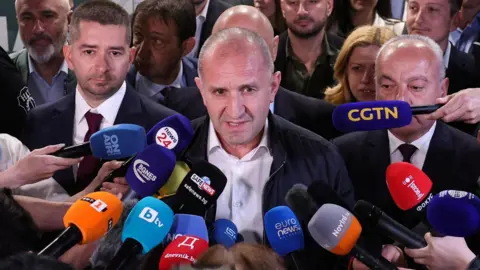
Rumen Radev's Progressive Bulgaria party looks set to win Sunday's Bulgarian Parliamentary election - the eighth general election in five years. Exit polls put his Progressive Bulgaria on 37%, significantly ahead of the closest runner-up, former Prime Minister Boiko Borisov's GERB party, which garnered 16%. Multiple other parties are expected to cross the 4% threshold and secure seats in parliament.
This election was called following widespread protests against the previous government's attempts to pass a contentious budget, a movement Radev openly supported as president. In his victory speech, Radev remarked, People rejected the self-satisfaction and arrogance of old parties and did not fall prey to lies and manipulation. I thank them for their trust, affirming his commitment to establishing a strong Bulgaria in a strong Europe.
Radev emphasized the need for critical thinking and pragmatic actions within Europe, ultimately positioning Bulgaria as a key player in enhancing the continent’s security and competitiveness. Although he is seen as a pragmatic and somewhat pro-Russian leader—often critical of EU sanctions and opposing military support for Ukraine—Radev has vocally committed to addressing domestic corruption and stabilizing government after years of fragile coalitions.
Having stepped down as president after nine years, Radev's pull in this election demonstrates a strong public mandate, yet his party may not possess enough power to govern independently, prompting Radev to seek coalition partners.
Significantly, Bulgaria's arms industry has seen a revival due to ongoing conflicts, allowing Radev to invite substantial foreign investment into local arms manufacturing to support the European defense ecosystem without directly endorsing military aid to Ukraine. His position reflects a balancing act of maintaining national interests while engaging with European defense frameworks.
This election was called following widespread protests against the previous government's attempts to pass a contentious budget, a movement Radev openly supported as president. In his victory speech, Radev remarked, People rejected the self-satisfaction and arrogance of old parties and did not fall prey to lies and manipulation. I thank them for their trust, affirming his commitment to establishing a strong Bulgaria in a strong Europe.
Radev emphasized the need for critical thinking and pragmatic actions within Europe, ultimately positioning Bulgaria as a key player in enhancing the continent’s security and competitiveness. Although he is seen as a pragmatic and somewhat pro-Russian leader—often critical of EU sanctions and opposing military support for Ukraine—Radev has vocally committed to addressing domestic corruption and stabilizing government after years of fragile coalitions.
Having stepped down as president after nine years, Radev's pull in this election demonstrates a strong public mandate, yet his party may not possess enough power to govern independently, prompting Radev to seek coalition partners.
Significantly, Bulgaria's arms industry has seen a revival due to ongoing conflicts, allowing Radev to invite substantial foreign investment into local arms manufacturing to support the European defense ecosystem without directly endorsing military aid to Ukraine. His position reflects a balancing act of maintaining national interests while engaging with European defense frameworks.