In brief
In Minneapolis, the recent uptick in immigration enforcement actions has left immigrant families in fear, prompting local residents to mobilize and provide immediate assistance. Volunteers, led by community members like Feliza Martinez, are offering safe havens, food, and emotional support to families affected by the crackdown. Many, like the Wampash Tuntuam family, are facing the distressing reality of potential deportation and the struggle to keep their children safe and cared for.
When federal immigration agents knocked on the door of his Minneapolis home, a young man in a family of ten knew that he had to act quickly to ensure the safety of his siblings. Their mother, a 41-year-old Indigenous Ecuadorian cleaner, had been detained just months prior, fearing a future where her eldest children could face similar fates. With eight siblings under his care, he reached out to Feliza Martinez, a church friend, for help.
Martinez, driven by a profound sense of compassion, spearheaded a volunteer effort to transport the family to a hidden safe house in southern Minneapolis. This initiative reflects a broader solidarity among Twin Cities residents, who have rallied to support immigrants amidst fears of increased police actions reminiscent of earlier, more aggressive immigration tactics.
As over 2,000 federal agents disperse across the Minneapolis-St. Paul area, more than 3,000 arrests have been reported since early December, stirring a mix of concern and community action. Residents are organizing to monitor federal activities and provide aid to impacted families, including paying rent for those afraid to go to work, delivering meals, and ensuring emergency custody arrangements for children.
Martinez, taking time off from her assembly line job, has become a beacon of hope for affected families, receiving daily calls from individuals in distress, assuring them of their support. “I just try to bring hope – like, ‘We’re here with you,’” she stated. The urgency of community action is even greater, as the safety of families like the Wampash Tuntuam becomes increasingly precarious.
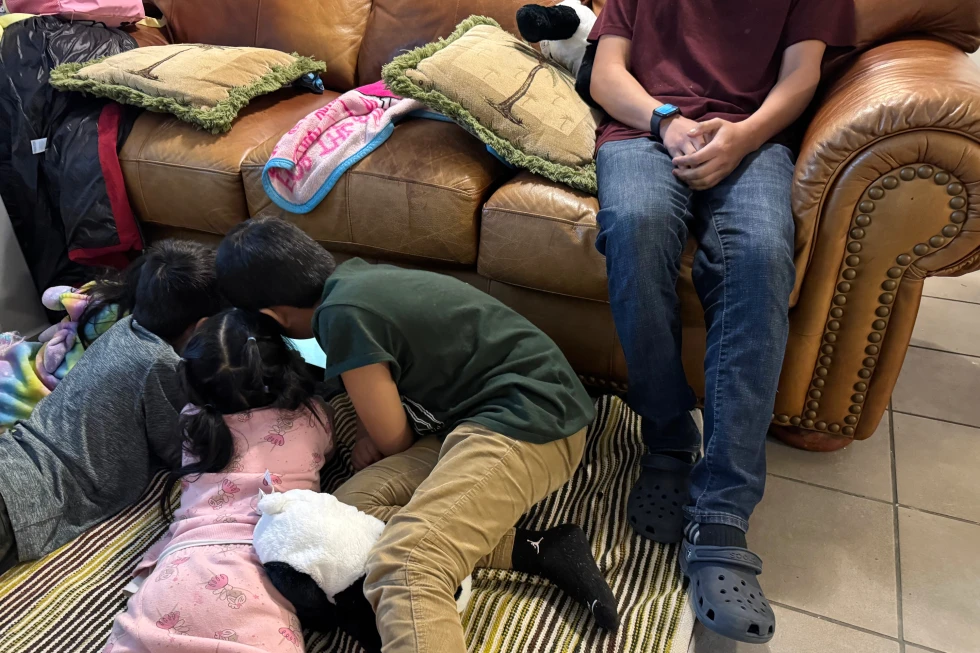
Upon arrival at the safe house, the younger siblings quickly settled in, surrounded by the sounds of laughter as they engaged in play, while older siblings grappling with anxiety shared their journey of escaping the trauma of government intervention previously faced at home. Their hopes are to obtain legal status while working day by day to navigate their increasingly uncertain future, constantly concerned about the well-being of their infant brother still dependent on their mother's care.
The local response to these federal actions has sparked diverse reactions, including reflective thoughts from Martinez, who has shifted her perspective on political leadership after witnessing the drastic impact of immigration enforcement questions among her community. “What he’s doing, it’s not Christian. It’s not my beliefs,” she expressed, denouncing the aggressive policies she once supported.
As families stay connected and begin to feel the weight of uncertainty, the bravest among them step forward to keep hope alive for younger siblings, fabricating stories about their mother's return while the community continues to lend their support. With the streets filled with snow, the warmth of community alliances flourishes even amidst the fear and trepidation faced by immigrant families in these trying times.