In brief
In recent discussions, middle powers like Canada and European nations are grappling with the challenges of a reinvigorated Great Power rivalries and an increasingly unilateral approach from the US under President Trump. Mark Carney emphasizes the need for these nations to unite in response to changes in the international order, which echoes sentiments expressed by observers of America's historical interventionist tendencies. The shifting alliances and the emergent dynamics underline the delicate balancing act middle powers must navigate in contemporary geopolitics.
As international relations evolve, middle powers confront significant challenges in a climate reminiscent of pre-World War II dynamics.
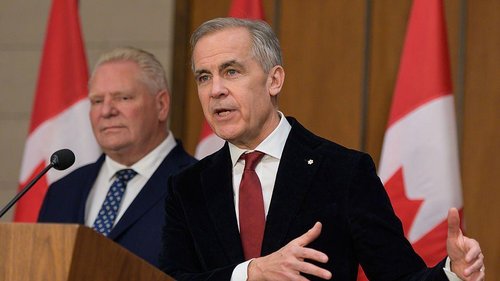
Recent events have showcased the precarious position of middle powers like Canada and various European nations amid a shifting international landscape. The rising tensions between leading powers and the apparent unilateralism from the US, accentuated by President Trump’s America First policy, are laid bare. At the recent Davos summit, Canadian Prime Minister Mark Carney urged middle powers to unite in the face of these geopolitical changes, suggesting that their very survival may depend on cooperation.
The echoes of historical interventions by the United States amplify concerns among these nations about their positions in a renewed Great Power rivalry. The perspectives shared by political leaders of these countries reveal an acute awareness of the implications of America's actions on their sovereignty and diplomatic standing.
As stated by Carney, “If you’re not at the table, you’re on the menu,” highlighting the necessity for middle powers to consolidate their approaches to maintain influence in global discussions.
Critics point out that this reflects a challenging era, where America’s historical themes of intervention, reminiscent of its Monroe Doctrine roots, reemerge under different justifications in contemporary politics. The ramifications of Trump’s approach, which often embraces unpredictability, foment anxiety within international relationships, particularly among allies seeking stability and predictability.
In an unexpected turn at Davos, there was a standing ovation for Carney, indicating a reawakening amongst middle powers, as they resolve to act with solidarity, recognizing their vital role in shaping a balanced international order amidst the escalating assertiveness from larger powers. This realization marks a pivotal moment in which middle powers must now advocate for established rules and norms, akin to the post-World War II framework.
The road ahead poses distinct challenges, as the specter of a return to a Great Power-dominated world looms large. Accordingly, discussions among middle powers will likely center around how to navigate the tension between national interests and collaborative diplomacy in world affairs.