In brief
In a devastating overnight assault, Russian strikes killed seven people in Ukraine, with the central city of Dnipro bearing the brunt of the attack. Ukrainian President Volodymyr Zelensky reported continued rescue efforts as survivors were sought under rubble. The barrage, involving drones and missiles, also targeted other Ukrainian cities, emphasizing the ongoing conflict's intense nature.
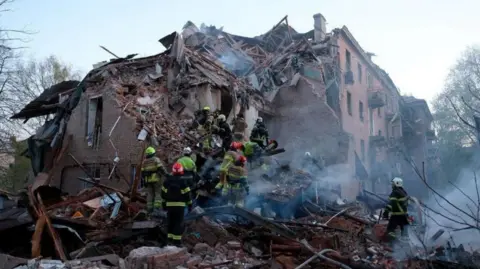
At least seven people were killed in Russian strikes across Ukraine overnight, including five in the central city of Dnipro, where officials said an apartment building was hit.Ukrainian President Volodymyr Zelensky said the latest attack lasted 'practically all night', while rescue workers were still searching for survivors under rubble in Dnipro on Saturday morning.British jets were scrambled from Romania during the heavy attack when Russian drones were detected near the border, though the UK Ministry of Defence rejected a report it had shot some down.Meanwhile, Ukraine carried out some of its longest-distance drone strikes deep inside Russian territory. In Yekaterinburg, almost 1,000 miles from Ukraine's border, the governor reported six injuries from a strike on a building, while nearby Chelyabinsk saw drones targeting an industrial facility intercepted.Russian missiles and drones also struck the northern city of Chernihiv, killing two, as well as Odesa and Kharkiv. Ukrainian authorities stated they repelled the majority of the over 600 Russian drones, marking the largest attack in several days.Zelensky noted on social media: 'The Russians' tactics have not changed: strike drones, cruise missiles, and a significant amount of ballistics. Most of the targets are ordinary infrastructure in cities. Residential buildings, energy, and enterprises have been damaged.'Russia's Ministry of Defence claimed it had downed 127 drones over more than a dozen regions and stated control over Bochkove, a village in Kharkiv, though this has not been verified.Elsewhere, Romania's defence ministry is investigating an object that fell in its territory near the Ukrainian border during the attack. They clarified earlier statements about British jets' engagement, emphasizing that they did not enter Ukrainian airspace and no drones were shot down.With peace talks at a standstill, Ukraine continues to seek international support for its military efforts. President Zelensky recently met with Saudi Arabia's Crown Prince Mohammed bin Salman to strengthen ties and discuss military cooperation in the wake of increased regional security threats.