In brief
Wayne Greier, a sixth-generation farmer in Canfield, Ohio, lost a potential solar project on his farm due to local opposition and state regulations. As he faces financial challenges, Greier joins other farmers advocating for solar energy, emphasizing the need for property rights and economic support in the agricultural sector. The opposition highlights the broader conflict between economic development, community concerns, and environmental sustainability, as farmers rally for legislative support to reverse bans on renewable energy projects.
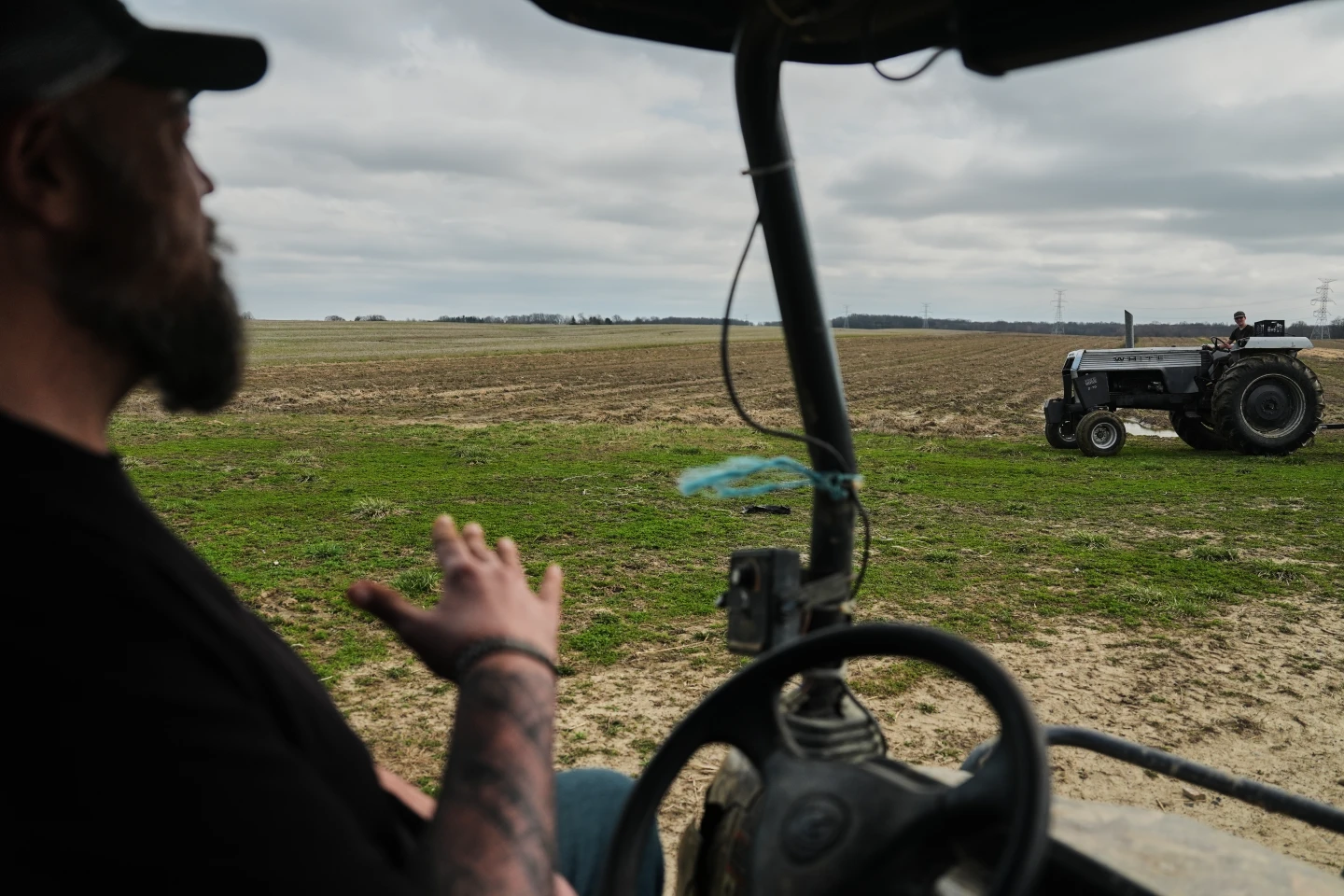
CANFIELD, Ohio (AP) — Through the window of his combine, Wayne Greier watches his teenage son Blake drive a tractor across an empty field, towing a plow into position for another uncertain season of spring planting.
Greier would be worrying less if the solar farm he wanted on his land had come to pass. But local officials blocked it in 2023 under an Ohio state law, and Greier — facing a heavy medical debt — had to sell part of his land to stay afloat. The deal that was killed would have brought him about $540,000 in lease payments every year.
“It was our saving grace,” he said. “It wasn’t a scary picture that everybody likes to paint about solar and the loss of farmland.”
Local opposition to solar has long been an obstacle for green energy developers. But some communities are working to reverse local restrictions, citing the tax benefits and jobs the projects bring and the lease payments from energy companies that can provide stable income to farmers in a volatile industry.
Greier began advocating for solar as he encountered community backlash over the proposed development on his farm. His family faced isolation and mental health struggles amidst heated public discussions about renewable energy and its impact on local farmland. “I was the one that was going to lose the sixth-generation farm. I was the one that couldn’t provide for my family,” he shared.
In Indiana, locals have voiced concerns regarding proximity to residential areas while advocating for improved policies for solar development. Community members think the frameworks for decisions about solar and wind should better reflect residents' opinions while ensuring development can proceed.
In Richland County, Ohio, advocates succeeded in getting a referendum to reverse a county ban on solar and wind projects, motivated by the economic and environmental benefits these developments could bring to their communities.
As Greier continues to share his experiences with lawmakers, he's joined by other farmers who face similar predicaments, all while pressing for policies that respect property rights and foster opportunities for renewable energy development.