In brief
Last October, a live fire demonstration over Camp Pendleton resulted in an artillery misfire that sent shrapnel onto Interstate 5, striking two CHP vehicles. Despite the incident being classified as a rare malfunction, the investigation found no negligence by the Marines, prompting questions from lawmakers about the decision to conduct live fire in a civilian area. California’s leaders expressed their frustrations regarding safety during the event, which coincided with protests against the Trump administration.
LOS ANGELES (AP) — A one in a million malfunction during an artillery demonstration over Camp Pendleton last October resulted in a misfire that rained shrapnel onto Interstate 5, affecting two California Highway Patrol (CHP) vehicles, according to a U.S. Marine Corps investigation.
The incident occurred during a live fire exercise celebrating the Marine Corps’ 250th anniversary, attended by Vice President JD Vance and Defense Secretary Pete Hegseth. An artillery shell detonated prematurely at an altitude of about 1,480 feet, scattering shrapnel across the closed roadway below and striking a CHP patrol car and a motorcycle.
The Marines' lengthy 666-page report, compiled and released to the public on December 19, concluded that the early detonation is beyond reasonable expectations for a round that is manufactured with remarkably low tolerances for defects.
It is manufactured to a tolerance of one defect in a million, the report stated. Investigators did not find any negligence by Corps personnel and the malfunction has raised significant safety concerns among state leaders.
Following the incident, 26 members of California's U.S. House delegation and both state senators sent a letter to Defense Secretary Hegseth, questioning the rationale behind conducting live artillery fire over the freeway and the measures taken to mitigate safety risks.
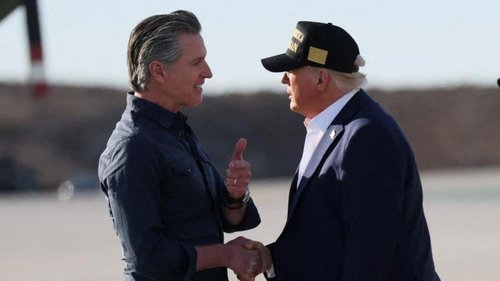
The October demonstration marked a significant point of contention between President Trump and California leaders, including Gov. Gavin Newsom, who criticized the safety implications while the military sought to assert its operational capabilities.
Newsom's office stated that the investigation results contrasted starkly with the prior demands made by Trump officials to conduct live fire in a populated area. Public officials have expressed discontent with the military's choice to display such force amid ongoing civilian protests in nearby San Diego.
The demonstration, which involved assets like aircraft and howitzers, was halted after the shrapnel incident, with the initial round reportedly failing to clear the roadway as intended.
Local safety authorities labeled the decision to fire live ammunition in such proximity to a busy freeway as not just unsafe but irresponsibly performed. The administration's framing of the event for political advantage, combined with the mishap, has sparked broader societal discussions regarding military practices and civilian safety during live exercises.