In brief
This article explores how Trump's volatility is impacting international relations, particularly with allies and adversaries alike, making allies rethink their reliance on U.S. commitments.
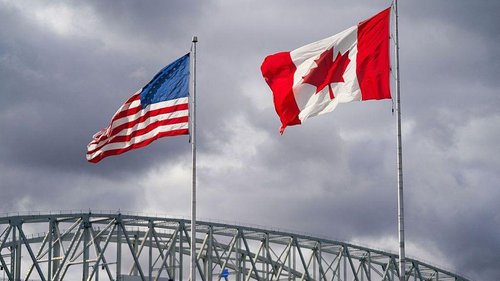
In recent developments, President Donald Trump has reignited debates surrounding his foreign policy, notably through his application of the 'Madman Theory.' This strategy, aimed at portraying unpredictability as a political weapon, is believed to be reshaping diplomatic engagements globally. Last month, Trump suggested a willingness to engage militarily with Iran but later gave the impression of facilitating pause for negotiations before launching military attacks. This inconsistent behavior reflects a broader pattern of unpredictability: a hallmark of Trump's governance.Peter Trubowitz, a professor at the London School of Economics, has observed that Trump's administration exhibits a notably centralized decision-making structure, reminiscent of the Nixon era, wherein Trump's character and temperament drive critical foreign policy decisions. Politically, Trump's inconsistency is employed deliberately to impose leverage over both allies and adversaries. The political theory suggests that when adversaries believe a leader is temperamental enough to act irrationally, they may concede to avoid potential conflict.Critically, Trump's administration has sparked discussions among allies regarding the U.S.'s reliability. His approach has included contentious remarks about NATO commitments, leading former UK defense secretary Ben Wallace to state that America’s pledge to NATO's Article 5 is "on life support." Leaked conversations have further revealed a dismissive attitude towards European partners, indicating a cultural shift within U.S. foreign policy.In alignment with his unpredictability, Trump has varied relations with global leaders. He's embraced Russian President Vladimir Putin while confusing allies like Canada, and he has even broached topics like military action against Greenland. Meanwhile, Trump’s actions have allegedly prompted European allies to reconsider their defense spending, with NATO members committing to substantial increases recently.Echoing the past, this strategy draws parallels with Richard Nixon's foreign policy during Vietnam, which also relied on unpredictability to sway negotiations. Scholars argue that Trump's volatility impacts crucial negotiations with adversaries like Iran and Russia, who may not be as susceptible to his political strategies as allies are.The core of this unpredictability rests on whether it can genuinely work against tougher opponents. Recent actions indicate that adversaries like Vladimir Putin remain largely unmoved by Trump’s antics. Experts predict that if Trump continues this course, it may compel nations like Iran to bolster their nuclear ambitions rather than yield to pressure. Trump's critics argue that this cycle could limit America's global influence, as allies become wary of U.S. commitments.Looking ahead, European leaders may feel compelled to develop a stronger independent defense capability due to America's shifting strategic priorities under Trump’s leadership. Analysts argue such changes could take years, and while temporary relations may seem improved, long-term outcomes remain ambiguous given the U.S.'s unpredictable path under the current administration.As the political landscape evolves, the implications of Trump’s 'Unpredictability Doctrine' remain profound, reshaping power dynamics and raising questions about future negotiations and commitments on the world stage. The efficacy of this strategy in both fostering alliances and deterring adversaries will be pivotal in the ongoing discourse surrounding international relations.