In brief
A new NCERT Grade 9 textbook once hid the torso of the iconic 'Dancing Girl' bronze sculpture with dark shading, prompting a backlash from scholars. The National Council of Educational Research and Training confirmed the change was a mistake and pledged to restore the original image in digital and future print copies. The incident underscores ongoing debates over censorship, representation of women in school materials and the evolving National Education Policy's Arts Education Series.
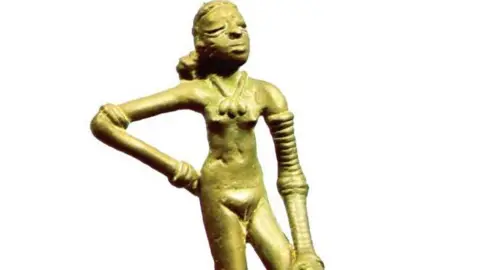
The image of the famous "Dancing Girl" bronze figurine was briefly obscured in a new NCERT Grade 9 textbook, igniting a fierce reaction from historians and educators. The artifact, discovered at Mohenjo‑daro in 2600 BCE, shows a young woman standing with one hand on her hip. The revised book had black shading over her torso, hiding anatomical features that had never been censored in earlier editions.
After the outcry, the National Council of Educational Research and Training (NCERT) confirmed that the new digital version of the textbook now displays the original, unedited photo. Future printed copies will also carry the untutored figure. NCERT Director Dinesh Saklani said the department had replaced the image following expert consultation and apologized for the error.
While the controversy sparked questions over perceived modesty standards and censorship, scholars argue that the ancient sculpture remains an artwork of confidence and poise, reflecting the advanced artistry of the Indus Valley civilization. The NCERT Academic Board’s decision to remove the shading restores the artifact’s historical integrity.
The episode also highlights the broader tension between protecting educational content and preserving authentic, sometimes provocative, historical objects. This tension will likely continue as NCERT pushes new Arts Education Series under the National Education Policy, integrating visual, performing and literary arts into mainstream schooling.