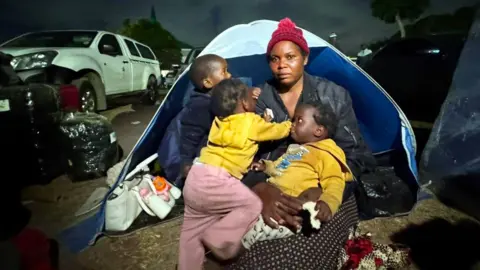
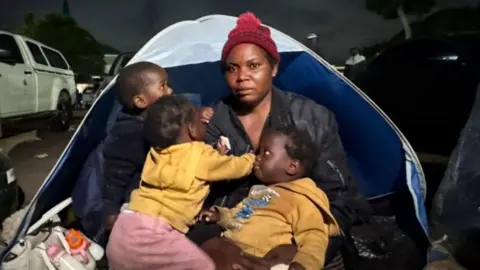
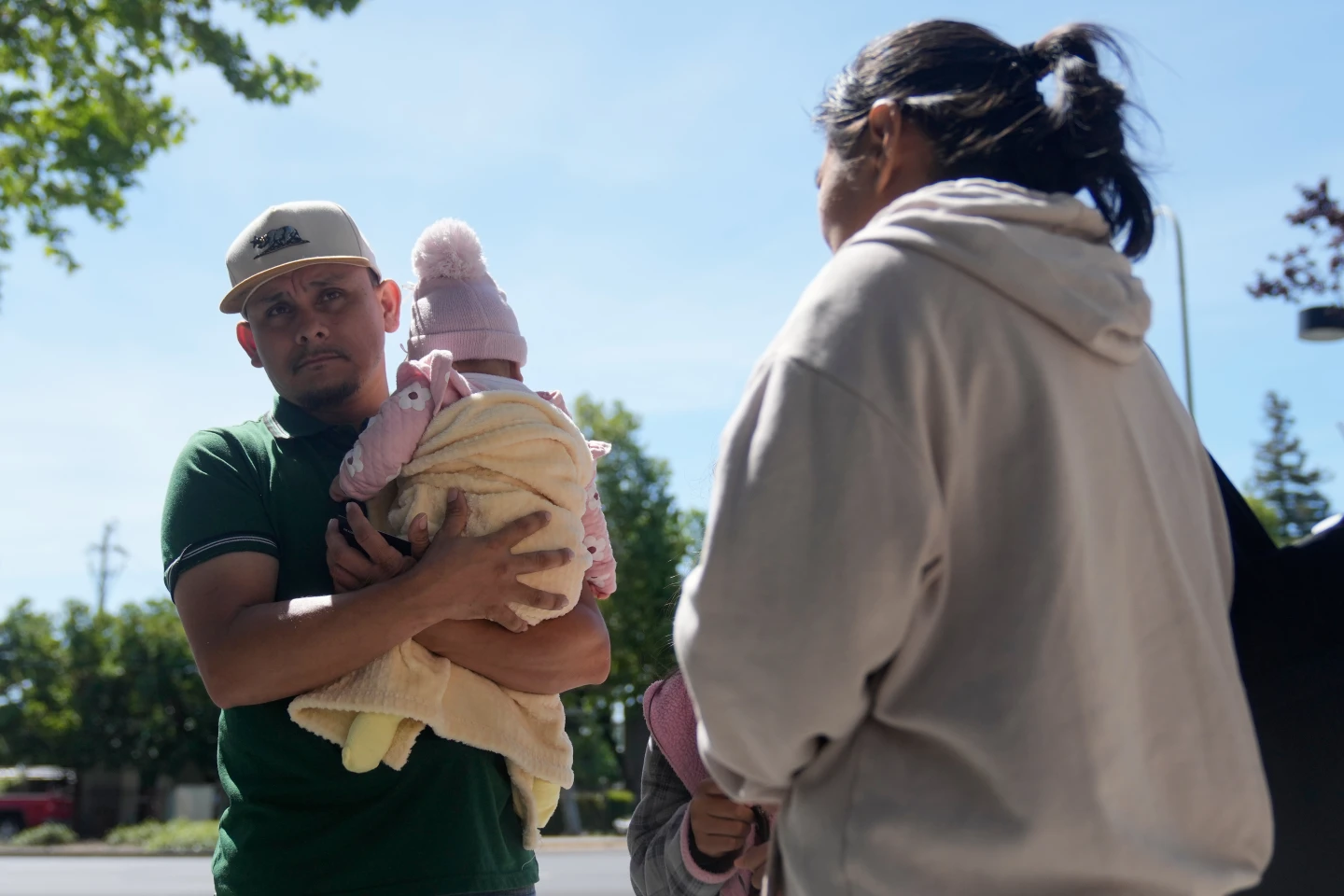
In Panama City, a tense atmosphere surrounds a group of approximately 300 deported migrants from various countries, including Iran, Afghanistan, and Cameroon. Many of them were released after being held in a guarded camp due to a lawsuit prompting their release. As they now occupy makeshift shelters, such as a school gymnasium, they are confronted with a dire lack of direction and support.
“My condition is critical,” one deportee stated, clearly overwhelmed and without access to necessary medical care. The migrants, largely forgotten and without a clear path ahead, are in urgent need of assistance and clarity about their potential next steps, as many fear being unwanted in Panama.
Initial responses from the Panamanian authorities included confinement in a hotel and then incarceration in a camp, actions that human rights advocates condemned. Now, many of those freed express profound uncertainty about their futures, grappling with basic survival needs while hoping for a safe resolution to their precarious situation.
Amidst their precarious circumstances, the immigrants face the pressing question: "What comes next?" as they navigate their newfound lives in an unfamiliar environment.
“My condition is critical,” one deportee stated, clearly overwhelmed and without access to necessary medical care. The migrants, largely forgotten and without a clear path ahead, are in urgent need of assistance and clarity about their potential next steps, as many fear being unwanted in Panama.
Initial responses from the Panamanian authorities included confinement in a hotel and then incarceration in a camp, actions that human rights advocates condemned. Now, many of those freed express profound uncertainty about their futures, grappling with basic survival needs while hoping for a safe resolution to their precarious situation.
Amidst their precarious circumstances, the immigrants face the pressing question: "What comes next?" as they navigate their newfound lives in an unfamiliar environment.