In brief
Potti Sriramulu’s 58‑day fast in 1952 forced Jawaharlal Nehru to create Andhra Pradesh, reshaping India's map. Today, climate activist Sonam Wangchuk is on a 19‑day hunger strike, drawing fresh attention to education reform. The article traces the tradition of fasting in Indian politics, its medical dangers, and the debate whether it remains a legitimate protest tool. It examines how modern hunger strikes still challenge government actions and the public’s response.
India’s hunger strikes have become a razor‑sharp tool for political change. From the 1952 fast of Potti Sriramulu that sparked the creation of Andhra Pradesh to the current 19‑day sit‑down of climate activist Sonam Wangchuk, the empty plate has been a powerful sign post on the map and in Parliament.
In October 1952, Potti Sriramulu began a public fast in the town of Jaggannapeta, demanding a separate state for Telugu speakers. Nehru had repeatedly rejected the demand, but the 58‑day hunger strike ultimately forced the government to announce the creation of Andhra Pradesh – a redrawn state line that still exists today. Historians label Sriramulu a forgotten hero, yet his empty stances proved the might of voluntary sacrifice.
Fast food has deep cultural roots in India. Religion and politics have long blended, with Mahatma Gandhi using fasting as a moral handshake with power. Between 1918 and 1948 Gandhi led 15 major fasts, aiming to resolve caste, communal and political crises. His message was simple: the empty stomach is a quiet yet compelling form of protest.
Fast‑based activism continues to proliferate. In 2011 activist Anna Hazare staged a 13‑day hunger strike that ignited a nationwide anti‑corruption march, while other figures such as Irom Sharmila have gone on for years and survived only with medical feed‑through. These examples illustrate how quickly public perception can shift when a body becomes a political symbol.
Medical science warns that the body is not meant to survive long without food. After two weeks, muscle tissue breaks down, electrolytes become imbalanced, and the heart risks life‑threatening rhythm changes. The longer a fast continues, the higher the danger. Therefore, governments often station doctors or force‑feed the strike, blending politics with emergency care.
Critics question whether fasting should still serve as a “blackmail” tactic. Some constitutional experts argue that once democratic channels exist, hunger strikes have no place in a constitutional democracy. Yet the reverence for Gandhi’s example keeps fasting alive in public protest.
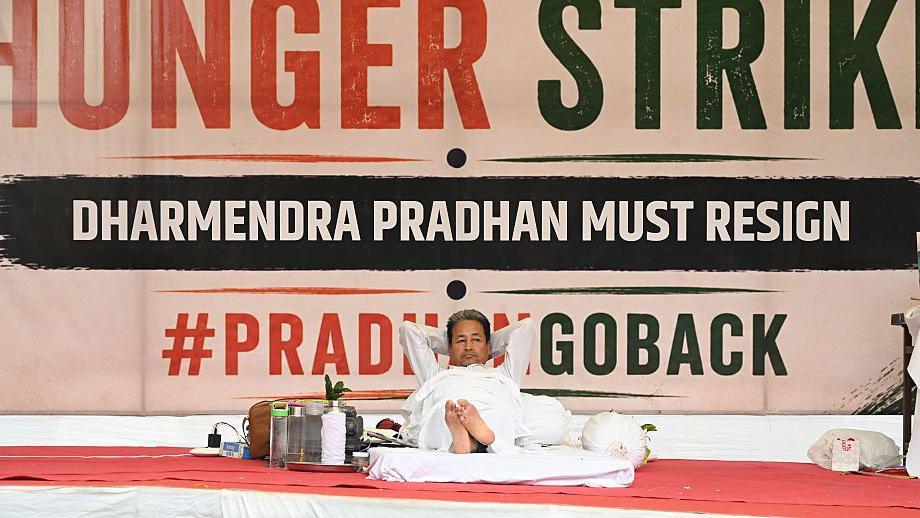
Sonam Wangchuk’s current fast is a modern echo of Potti Sriramulu’s legacy. Despite halting his food for 19 days and losing more than 9 kg, by drinking only salt water, his protest has prompted the Delhi High Court to order health monitoring. Supporters frame his struggle as a call for education reform through the so‑called Cockroach Janta Party movement, while detractors warn that his health will soon necessitate medical intervention.
Whether Wangchuk’s fast will trigger the same political recalibration as Sriramulu’s remains to be seen. The act still carries symbolic weight: an empty stomach can become a mirror that forces governments to reckon with public outrage. In a country where public protest is often dismissed, the hunger strike remains a stubborn, if contentious, political tool.