In brief
Frank Gehry, a pivotal figure in modern architecture, has died at 96. His designs, such as the Guggenheim Museum in Bilbao, redefined architectural norms with their innovative materials and unpredictable forms. Recognized with numerous awards, including the Pritzker Prize, Gehry's creative impact will continue to inspire future generations.
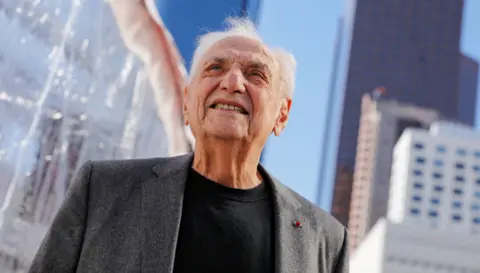
Frank Gehry, one of the most influential architects of the last century, has died aged 96. Gehry was acclaimed for his avant-garde, experimental style of architecture. His titanium-covered design of the Guggenheim Museum in Bilbao, Spain, catapulted him to fame in 1997. His breakthrough in the architectural world came years earlier when he redesigned his own home in Santa Monica, California, using materials like chain-link fencing, plywood, and corrugated steel.His death was confirmed by his chief of staff Meaghan Lloyd. He is survived by two daughters from his first marriage, Leslie and Brina, as well as his wife, Berta Isabel Aguilera, and their two sons, Alejandro and Samuel.Born in Toronto in 1929, Gehry moved to Los Angeles as a teenager to study architecture at the University of Southern California, before completing further study at the Harvard Graduate School of Design in 1956 and 1957. After starting his own firm, he broke from traditional architectural principles of symmetry, using unconventional geometric shapes and unfinished materials in a style now known as deconstructivism.Through blending unexpected materials and sheathing buildings in stainless steel to create curvy exteriors, Gehry created buildings that took on arresting sculptural shapes. Later in his career, Gehry used 3D modeling similar to that used by aerospace engineers to shape windy buildings, a practice largely avoided by other architects because of the complexity and costliness of construction.In 1989, at the age of 60, Gehry was awarded the industry's top accolade, the Pritzker Architecture prize, for lifetime achievement. The Pritzker jury said his work possessed a highly refined, sophisticated and adventurous aesthetic. Gehry's international breakthrough with the Guggenheim transformed the city of Bilbao, boosting tourism to the city and the local economy. Crafted out of titanium sheets, limestone, and glass, the museum was instantly celebrated as a modern marvel.Other cities tried to replicate its success, branded the Bilbao effect, where investment in daring art could revitalize ailing economies. His work in Bilbao put him in high demand, and he went on to design iconic structures in cities all over the world: the Jay Pritzker Pavilion in Chicago's Millennium Park, the Gehry Tower in Germany, and the Louis Vuitton Foundation in Paris.Tributes are celebrating his eagerness to discard convention and forge his own creative legacy. Paul Goldberger, author of Building Art: The Life and Work of Frank Gehry, came to know Gehry closely, and said he wanted to work until the day he died. Canadian Prime Minister Mark Carney extended his deepest condolences to Gehry's family and the many admirers of his work. Gehry's spirit and legacy will always remain connected to Bilbao.