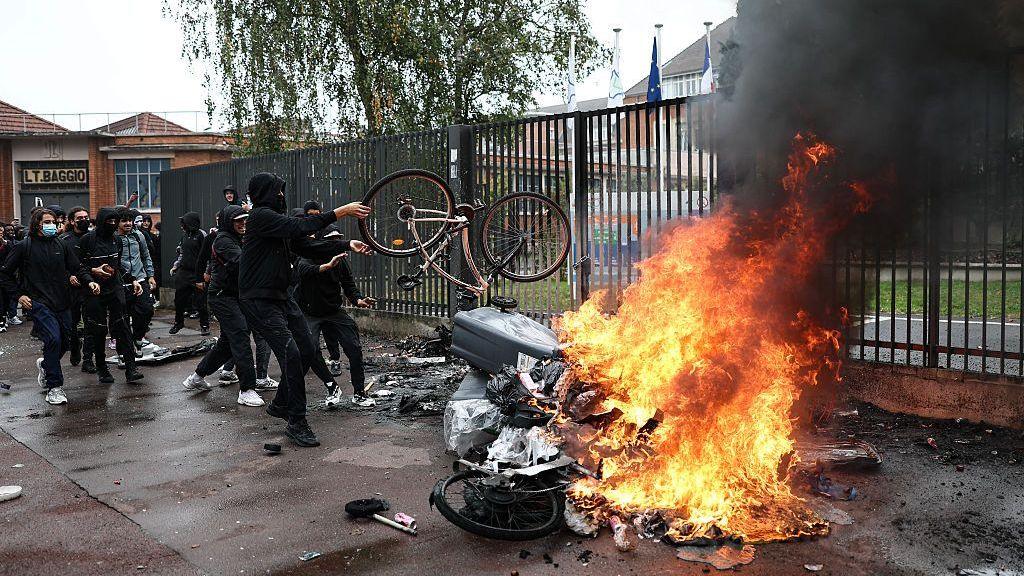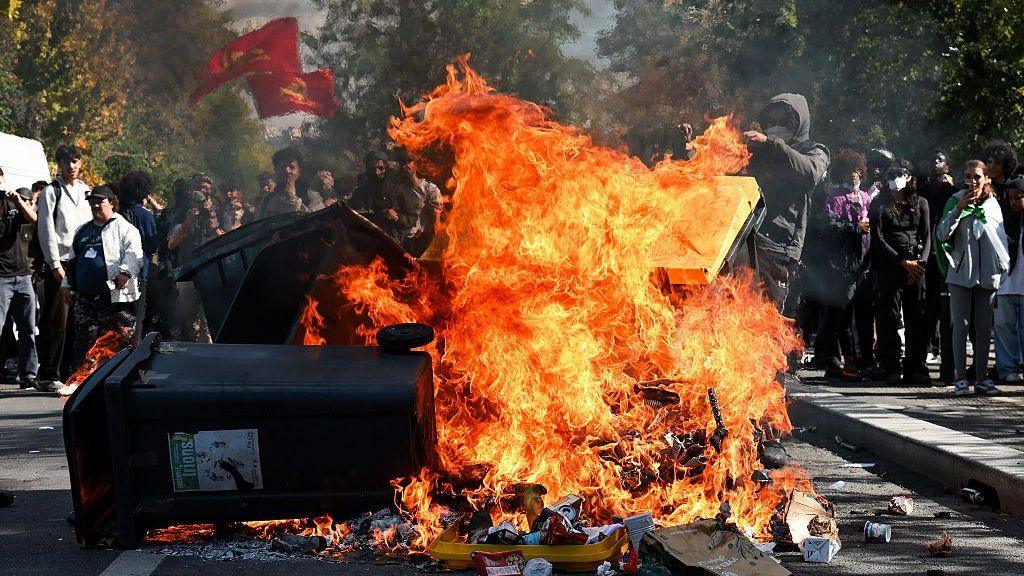

Students rally outside a secondary school in France.
The first fire erupted at a high school in Nantes where students set a bin ablaze, launching flames that quickly invaded the building’s entrance hall. Similar incidents followed in Rouen and Marseille, where students poured petrol and launched fireworks into school premises.
The protests were sparked by a growing list of grievances: shortages of teachers, overcrowded classrooms, and run–down infrastructure. The demonstration lines extended into university campuses, with over thirty universities reporting blockades including those in Rennes and Paris.
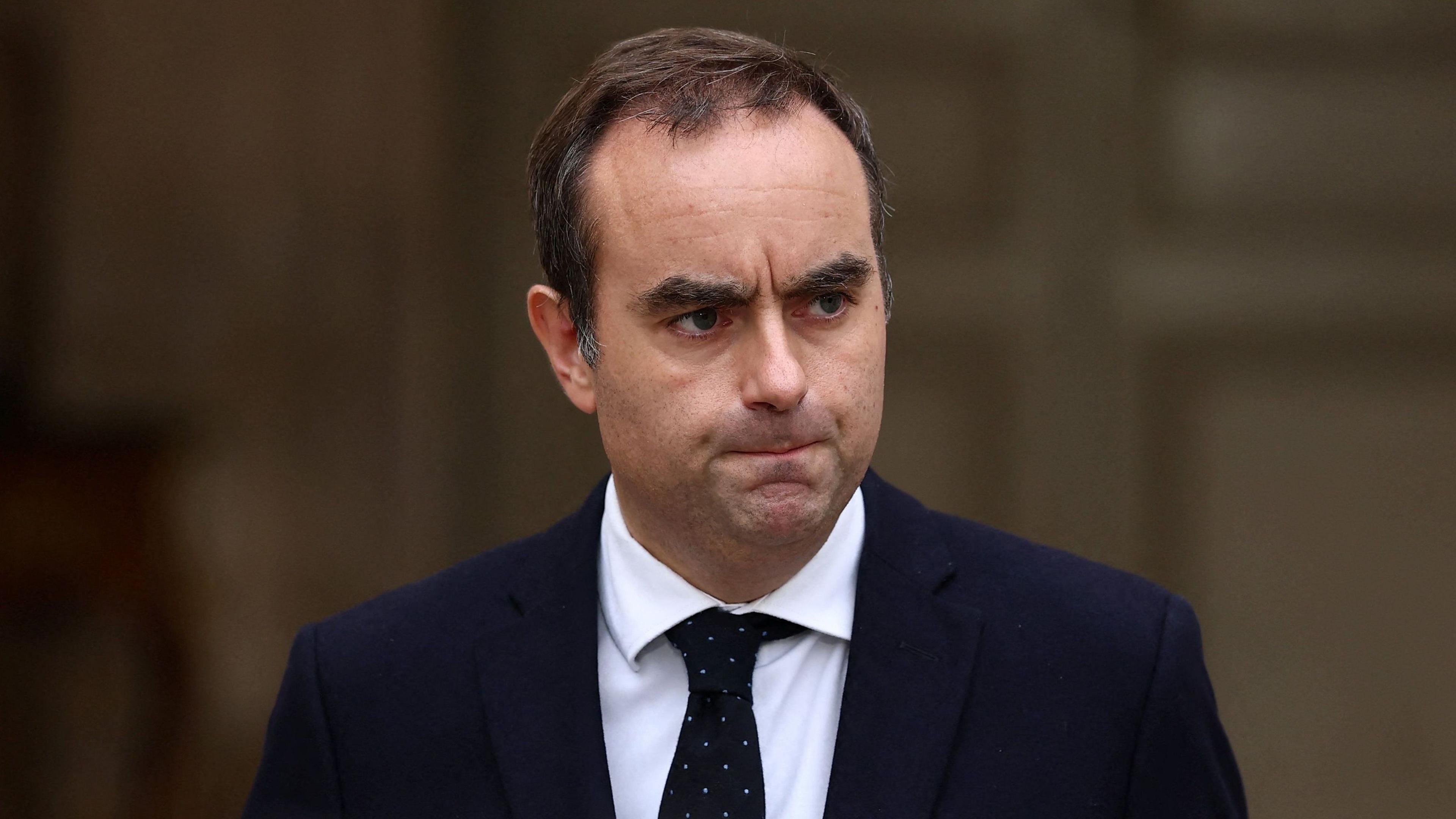
Prime Minister Sébastien Lecornu convened a crisis meeting to assess the situation. The government subsequently labelled the surge of demonstrations as “urban violence.”
Authorities reported that seventy‑five arrests were made on Wednesday alone, supplemented by an additional 530 arrests later that day, bringing the total to over 600. Police injuries numbered 83, and several teachers and students sustained injuries from the fires and related disruptions.
The student casualties were escalating on the ground. For instance, a headteacher at a school in Auchel was hit in the ear by a stray firework, while teachers at Victor Hugo high school in Marseille were splashed with petrol.
Reactions among elected officials were sharply divided. Hard‑right figures such as Marine Le Pen announced a new anti‑riot law, while members of La France Insoumise urged calm, noting that the protests were rooted in legitimate concerns over student futures. The left‑wing mayor of Marseille condemned the “unacceptable violence,” acknowledging the legitimate angst but stressing the need for peaceful expression.
Students living in the early years of their education are now calling for urgent reforms to bring back trainers, adequate resources and safe learning environments. Police, in turn, requested parents of those damaging school property to contribute to repairs, while some local politicians threatened to hold accountable the responsibility of the youth demonstrating in school halls.
Transportation services were disrupted in Marseille and Strasbourg as authorities feared further escalation. As the unrest spreads, the French public continues to grapple with conflicting narratives: whether students are showing stone‑wall‑tactics or legitimate demands that institutions must address.
The protests unfold days before a national election, amplifying political rhetoric across the spectrum. While France’s democratic institutions remain under strain, the ultimate conclusion of the nation’s education system remains uncertain as negotiations reconcile the needs of students, teachers and taxpayers.