In brief
As a multi-billion-dollar project seeks to transform Great Nicobar Island, fears loom over the potential displacement of indigenous communities and ecological degradation.
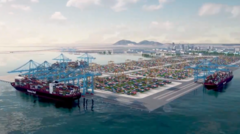
The Indian government's plan for a transformative development project on Great Nicobar Island has ignited both hope and anxiety. Aimed at establishing a 'Hong Kong-like' hub in one of the world's most secluded areas, this ambitious initiative involves a significant investment of approximately 720 billion rupees (around $9 billion). The project envisions a sprawling infrastructure that includes a transshipment harbor, airport, power plant, and township across an area of 166 square kilometers.Anice Justin, an anthropologist and island resident, voices the concerns of many locals who depend on the island's natural resources for their survival. "The forest is our supermarket," he states, illustrating the integral role that the environment plays in the daily lives of the islanders.Although the development plan promises to boost trade and tourism, potentially accommodating 650,000 residents over the next 30 years, it threatens to displace indigenous communities like the Shompen tribe, who maintain a traditional way of life deep within the island's rainforests. The ecological cost of this initiative is sobering, as around 80% of the island is covered in precious rainforests, home to countless unique species.Environmental advocates and experts have warned that the government's assurances of minimal land clearance could be misleading. The current estimation suggests that approximately 130 square kilometers, equivalent to the destruction of nearly 1 million trees, will be cleared for development. However, critics like ecologist Madhav Gadgil warn that the associated pollution and infrastructure growth can have far-reaching negative impacts on the island's ecosystem.While the Environment Ministry has defended the project, claiming it will not disrupt tribal communities, skepticism persists. Earlier warnings from international experts characterize the initiative as detrimental to the Shompen tribe's existence, stating that they lack the resources to adapt to an industrial world. The fate of the Nicobarese, who faced similar displacement after a devastating tsunami in 2004, looms in the minds of those watching these developments closely.Health risks are also a significant concern as uncontacted communities like the Shompen are particularly vulnerable to diseases brought in from the outside world. Survival International officials highlight that populations can experience drastic declines upon contact with new diseases.From the perspective of marine life, the proposed developments could also spell disaster. The surroundings of Galathea Bay, home to vital species including nesting giant leatherback sea turtles, stands at risk. Social ecologist Dr. Manish Chandi voices concerns over the potential alteration of habitats crucial for the survival of diverse marine species.The long-lasting implications of the Great Nicobar Island project call into question whether development can be pursued without sacrificing the delicate balance between modernity, indigenous rights, and ecological preservation. The outcome remains uncertain, but the growing distress among islanders and environmentalists suggests that vigilance and advocacy will be crucial in the years ahead.