In brief
Explosive Media is creating viral AI videos featuring Lego aesthetics that serve as pro-Iran propaganda, reaching hundreds of millions. These videos, illustrating themes of resistance against U.S. oppression, have become a potent tool in shaping narratives during the Iran-US conflict. Despite being characterized by factual inaccuracies, the clips resonate strongly among audiences, leading to a new form of internet diplomacy.
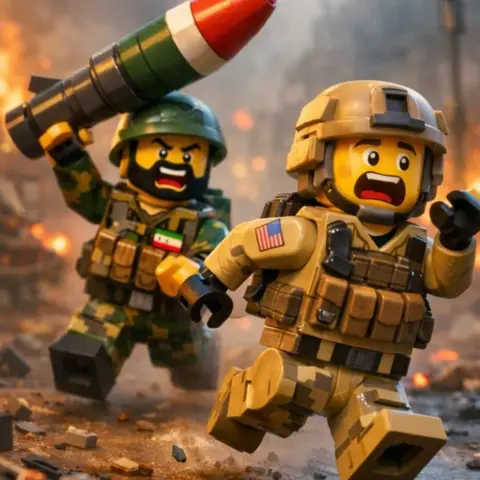
At first glance, the videos produced by Explosive Media look like scenes from a vivid Lego movie, with their rapid pace and vibrant graphics. However, they dive into darker themes, depicting dying children, fighter jets, and even political figures like US President Donald Trump, all framed within a pro-Iran narrative.In an interview for the BBC podcast Top Comment, a representative of Explosive Media, who chose to remain anonymous and referred to himself as Mr. Explosive, revealed the intricate mix of propaganda and entertainment that defines his team's output. Initially denying any direct ties to the Iranian government, he later acknowledged that the regime is indeed a customer, adding complexity to the narratives his videos present.The overarching theme in these clips is the portrayal of Iran as a victim of global oppression led by the United States, a message that resonates with viewers despite the videos' garishness and bluntness. For example, one clip features Trump falling through a whirlwind of documents, while another highlights police brutality through the lens of the George Floyd incident, framing Iran as a defender of the oppressed.Experts describe this content as more than just 'slopaganda'—a term suggesting low-quality propaganda—citing its sophistication and reach. Dr. Emma Briant, a leading propaganda authority, notes that these AI-generated clips have likely been viewed hundreds of millions of times, underscoring their impact in the digital space.Emerging during the ongoing US-Iran conflict, Explosive Media's output has gained traction rapidly, with Lego-style graphics designed to create an emotional connection, described by Mr. Explosive as 'a world language'. The videos are often produced quickly to respond to developments in the war, sometimes appearing online before official reports are released.Despite factual inaccuracies, such as misleading portrayals of U.S. military operations, these videos are effectively altering narratives among English-speaking audiences. One TikTok influencer praised them for their 'shockingly accurate' representation of events, illustrating the powerful potential of AI in shaping perceptions and fostering 'defensive memetic warfare'.While social media platforms attempt to counter this phenomenon by shutting down accounts spreading these videos, new ones continuously emerge, crafting an agile method of internet diplomacy that allows Iran to bypass traditional media.As such, the digital landscape around warfare has drastically shifted, with internet expression becoming a battleground for influence, miscommunication, and propaganda. Traditional diplomacy seems to dissolve, leaving a complex interplay between narrative construction and audience engagement, a situation leading to a collective state of uncertainty and misinterpretation in global conflicts.