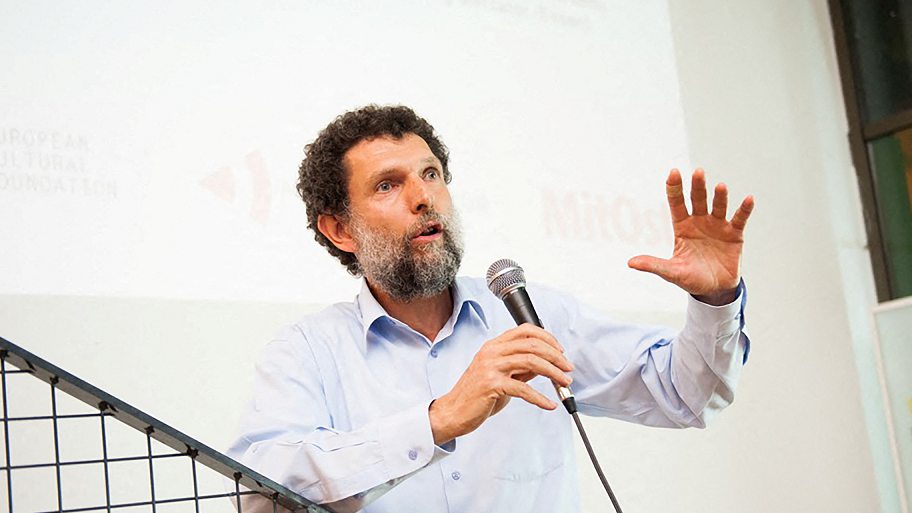
The European Court of Human Rights (ECHR) has ordered the Turkish government to release Osman Kavala, a prominent activist and philanthropist, whose detention since 2017 has been deemed unlawful and politically driven.
Kavala was sentenced to life imprisonment in 2022 over allegations linked to the 2013 protests and a failed 2016 coup‑attempt. The ECHR ruled that his continued incarceration violated fundamental rights such as a fair trial, freedom of expression, and association.
The court also described Kavala’s aggravated life sentence as “inhuman and degrading treatment,” emphasising that the charges were intended to punish him for his role in the Gezi Park demonstrations and to silence dissent.
Increasingly, Turkey’s judiciary has been accused of targeting critics and human‑rights defenders. The ECHR’s decision exposed a systemic problem in Turkey’s handling of political opponents and highlighted structural shortcomings in judicial independence.
Despite previous ECHR rulings in 2019 and 2021 that declared Kavala’s imprisonment unlawful, Turkey failed to implement those decisions, leaving the activist in prison. The new ruling adds pressure for Ankara to comply or risk further sanctions from the Council of Europe.
The international community, including Amnesty International, has called for an immediate and unconditional release, urging Turkey to honour its obligations under the European Convention on Human Rights.
Kavala’s case remains a flashpoint in Turkey’s relations with the West. The upcoming Committee of Ministers meeting may bring more scrutiny to Ankara’s compliance with ECHR obligations and could potentially lead to punitive measures for violating rule‑of‑law principles.