In brief
Venezuela's government has enacted a ban on six major international airlines after they suspended flights to the country in response to U.S. warnings of increased military activity in the area. The affected airlines were warned to resume operations within 48 hours or face repercussions. This decision comes amidst rising tensions between the U.S. and Venezuelan governments, with accusations of state terrorism being exchanged. The U.S. military has increased its presence near Venezuela, citing drug trafficking operations as justification.
In a dramatic escalation of tensions, Venezuela has prohibited six major international airlines from landing in its territory. This decision follows the airlines' suspension of routes to the capital, Caracas, after a U.S. warning of increased military activity in the region.
The airlines—Iberia, TAP Portugal, Gol, Latam, Avianca, and Turkish Airlines—were given an ultimatum to resume flights within 48 hours, which they did not meet. The Venezuelan government has expressed outrage at these companies, accusing them of contributing to 'state terrorism' aligned with U.S. actions against the Maduro regime.
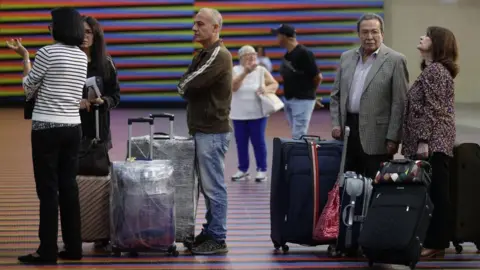
Reports indicate that thousands of passengers are affected by this suspension, as many flights have been canceled indefinitely. While smaller carriers still provide service, the ban brings significant restrictions to air travel in and out of the country.
The escalating hostilities have been fueled by U.S. military maneuvers, including a deployment of 15,000 troops and the USS Gerald Ford carrier near Venezuelan waters, under the guise of combating drug trafficking.
On the political front, the U.S. Federal Aviation Authority (FAA) has warned airlines operating in Venezuela to exercise heightened caution amid worsening security concerns. Only days ago, the embattled Venezuelan President Nicolás Maduro seemed open to dialogue with U.S. officials, but tensions remain high following this latest ban.
As the situation evolves, it reflects broader geopolitical complexities and challenges facing both countries, with significant implications for international air travel and diplomatic relations.