In brief
At a treatment centre in Mongbwalu a patient survives a deadly strain of Ebola and is welcomed into the world with song, offering a rare spark of hope. Despite this, more than 140 people have died in the province and rumours of a ritual “coffin curse” push many to avoid the medical facility. Health workers face high risk but improved protective measures have cut infections. Every new recovery reinforces trust and encourages villagers to seek early care, a vital step in the fight to control the outbreak.
A Song of Survival
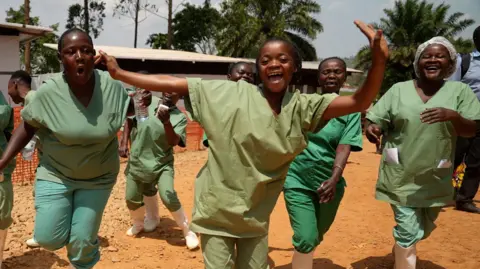
On a hot afternoon a dozen medics in green uniforms sang a praise tune as they escorted a young man named Daniel out of a tightly‑sealed treatment area. Two negative blood tests confirmed he was virus‑free after a three‑week stay. He smiled with relief, clapping hands and lifting a hand in a victory salute while standing between rows of orange netting that marked the exit path.
His words reflected faith: I was sick before I came here but God is great and I am well now. The moment was shared by witnesses but the wider community is still shaken by a series of deaths.
Hope Amid the Deadly Numbers
The outbreak of the Bundibugyo strain has killed more than 140 residents of Ituri province, a fatality rate close to twenty percent. The virus feels almost invisible until treatment becomes delayed; oft people try traditional remedies once symptoms appear, then arrive too late at hospitals. Each new case is traced for contacts, but many infected relatives remain hidden.
Outbreak officials point to community rumours that fatality is a punishment, called the coffin curse. When a broken coffin was burned after a body in 2024, locals blamed the act and the virus followed. As a result, some towns fired or abandoned treatment centres, sometimes when the disease was still in the early stages.
Staff Under High Risk, Training on the Edge
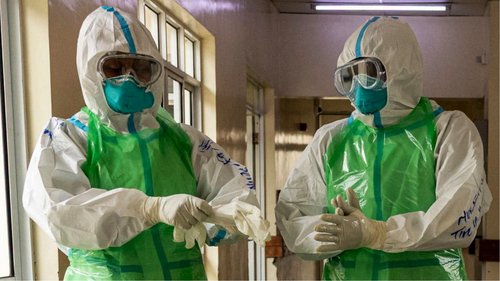
Medical staff have endured infections themselves; five have died and others remain ill. New protective protocols – goggles, gloves, full gowns and air‑purifying masks – cut risk, yet the outbreak’s fast pace keeps risk high. A local doctor recalled his first Ebola case: this patient was “dead” when they entered the room, making it a personal battle.
The centre’s new laboratory now returns test results in a day, a stark improvement over a week‑long wait from the nearest station in Bunia.
Building Trust and the Road Ahead
The first patient to leave the Mongbwalu centre a week ago was a 55‑year‑old pastor, a milestone that urged more villagers to seek care. Yet fear remains, and every survivor becomes an ambassador for the medical system. A mother who recovered after months is eager to return to her family, hopeful that trust will grow.
Health workers remain vigilant. They also stress the need for fast contact tracing – failure to identify every infected person could derail progress. Video footage of families grieving or celebrating travels across social media, amplifying the virus’s social dimensions while underscoring the urgency of collective action.
In the face of death, community resilience shows itself in this survival song, echoing the truth that with shared effort and scientific care, even the most lethal outbreak can be met with hope and recovery. The next step is for health teams to keep cultivating trust, tapping local networks and strengthening training so that future cases are caught early and treated swiftly.