May 8, 2025, 5:44 p.m. ET - Vatican City
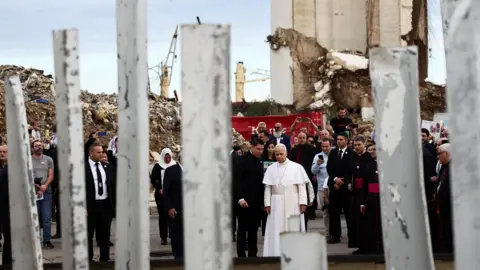
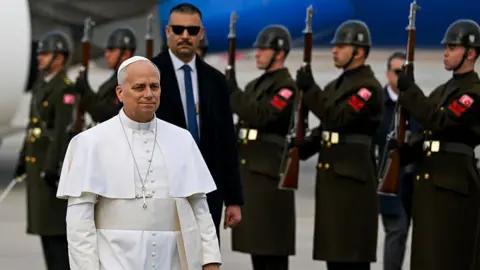
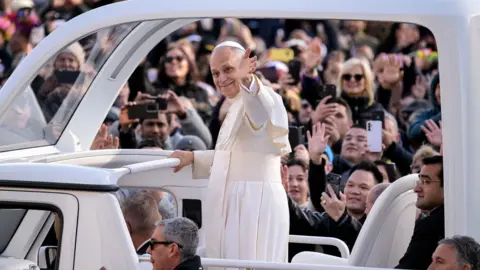
Former Cardinal Robert Francis Prevost was elected as the 267th pope of the Roman Catholic Church on May 8, 2025. Taking the name Pope Leo XIV, he is acknowledged as the first pope from the United States, a move expected to defy longstanding notions that a leader from a global superpower would not be chosen for this role. Elected after a two-day conclave, Leo XIV addressed a jubilant crowd in St. Peter's Square, reaching out with a message of peace and unity.
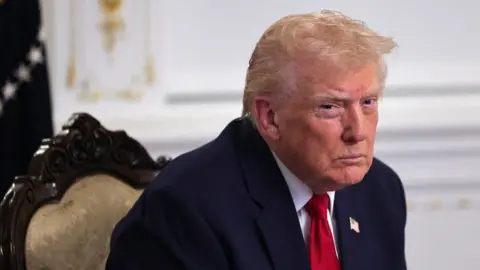
The new pope, who was born in Chicago and has spent over twenty years serving in Peru, is celebrated not only in Vatican City but also in his ancestral city and across the Americas. The election was sent with joy and national pride, as reactions poured in, including from President Trump, who recognized the significance of having an American pope.
Amidst voting that saw over 133 cardinals converge, the conclave ended swiftly after just a day and a half of deliberations. Prevost's supporters positioned him as a moderate figure capable of leading an institution grappling with ideological divides aimed at continuing the inclusive agenda set by his predecessor, Francis.
In his inaugural speech, Pope Leo XIV emphasized the necessity for a united church, particularly in times of increased global instability and division. He articulated a desire to “build bridges” that nurture dialogue and cooperation among communities.
As the global community reacts, prominent leaders—including President Biden and various international figures—congratulated the new pope, expressing hopes of addressing pressing issues like social justice and peace. Notably, reactions in his hometown of Chicago mirrored national sentiments, with locals celebrating his ascent.
This election marks a pivotal transformation in the church's leadership, showcasing an emerging narrative of a leader who not only navigates international politics but actively engages with complex issues, such as migration and social equity. Observers are keen to see how Leo XIV will address critical church ministries while balancing the influences of diverse cultures and ideas within the evolving scope of Catholicism.
Former Cardinal Robert Francis Prevost was elected as the 267th pope of the Roman Catholic Church on May 8, 2025. Taking the name Pope Leo XIV, he is acknowledged as the first pope from the United States, a move expected to defy longstanding notions that a leader from a global superpower would not be chosen for this role. Elected after a two-day conclave, Leo XIV addressed a jubilant crowd in St. Peter's Square, reaching out with a message of peace and unity.
The new pope, who was born in Chicago and has spent over twenty years serving in Peru, is celebrated not only in Vatican City but also in his ancestral city and across the Americas. The election was sent with joy and national pride, as reactions poured in, including from President Trump, who recognized the significance of having an American pope.
Amidst voting that saw over 133 cardinals converge, the conclave ended swiftly after just a day and a half of deliberations. Prevost's supporters positioned him as a moderate figure capable of leading an institution grappling with ideological divides aimed at continuing the inclusive agenda set by his predecessor, Francis.
In his inaugural speech, Pope Leo XIV emphasized the necessity for a united church, particularly in times of increased global instability and division. He articulated a desire to “build bridges” that nurture dialogue and cooperation among communities.
As the global community reacts, prominent leaders—including President Biden and various international figures—congratulated the new pope, expressing hopes of addressing pressing issues like social justice and peace. Notably, reactions in his hometown of Chicago mirrored national sentiments, with locals celebrating his ascent.
This election marks a pivotal transformation in the church's leadership, showcasing an emerging narrative of a leader who not only navigates international politics but actively engages with complex issues, such as migration and social equity. Observers are keen to see how Leo XIV will address critical church ministries while balancing the influences of diverse cultures and ideas within the evolving scope of Catholicism.