In brief
Danish PM Mette Frederiksen declared that \"Europe won't be blackmailed\" as European leaders responded to President Trump's threats of tariffs and potential military action regarding Greenland. The leaders issued a joint statement stressing their commitment to transatlantic relations and supporting Denmark and Greenland amidst rising tensions. Protests against Trump's plans were held, indicating strong opposition both in Greenland and Denmark.
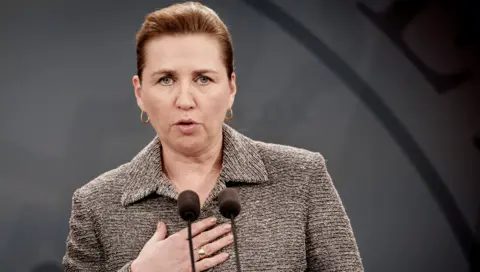
Denmark's Prime Minister Mette Frederiksen says Europe won't be blackmailed, as she and other European leaders continue to weigh their response to US President Donald Trump's tariff threats over Greenland.
Trump says he will impose new taxes on eight US allies - Denmark, Finland, France, Germany, the Netherlands, Norway, Sweden, and the UK - in February if they oppose his proposed takeover of the autonomous Danish territory.
He insists Greenland is critical for US security and has not ruled out taking it by force - a move that has drawn widespread criticism.
The countries threatened with tariffs have now issued a joint statement, saying Trump's plan risks a dangerous downward spiral.
Tariff threats undermine transatlantic relations, they said, reiterating that they stand in full solidarity with the Kingdom of Denmark and the people of Greenland.
The countries stressed they are committed to strengthening Arctic security as a shared transatlantic interest as members of the NATO military alliance.
Separately, Frederiksen wrote on Facebook: We want to cooperate and we are not the ones seeking conflict. And I am happy for the consistent messages from the rest of the continent: Europe will not be blackmailed.
It came as EU members held an emergency meeting in Brussels on Sunday.
Trump has threatened to impose a 10% tariff on goods from Denmark, Norway, Sweden, France, Germany, the UK, the Netherlands, and Finland, which would come into force on 1 February, but could later rise to 25% - and would last until a deal was reached.
Public anger in both Denmark and Greenland at Trump's threats over Greenland appears undiminished. Demonstrations against Trump's takeover plans were held in Greenland's capital, Nuuk, as well as in various Danish cities, coinciding with a US Congressional delegation visit.
A recent poll suggests that most Americans oppose US control of Greenland—indicating a significant divide on the issue. This ongoing situation highlights the complexities surrounding Greenland's status and the potential ramifications on international relations in the Arctic region.