In brief
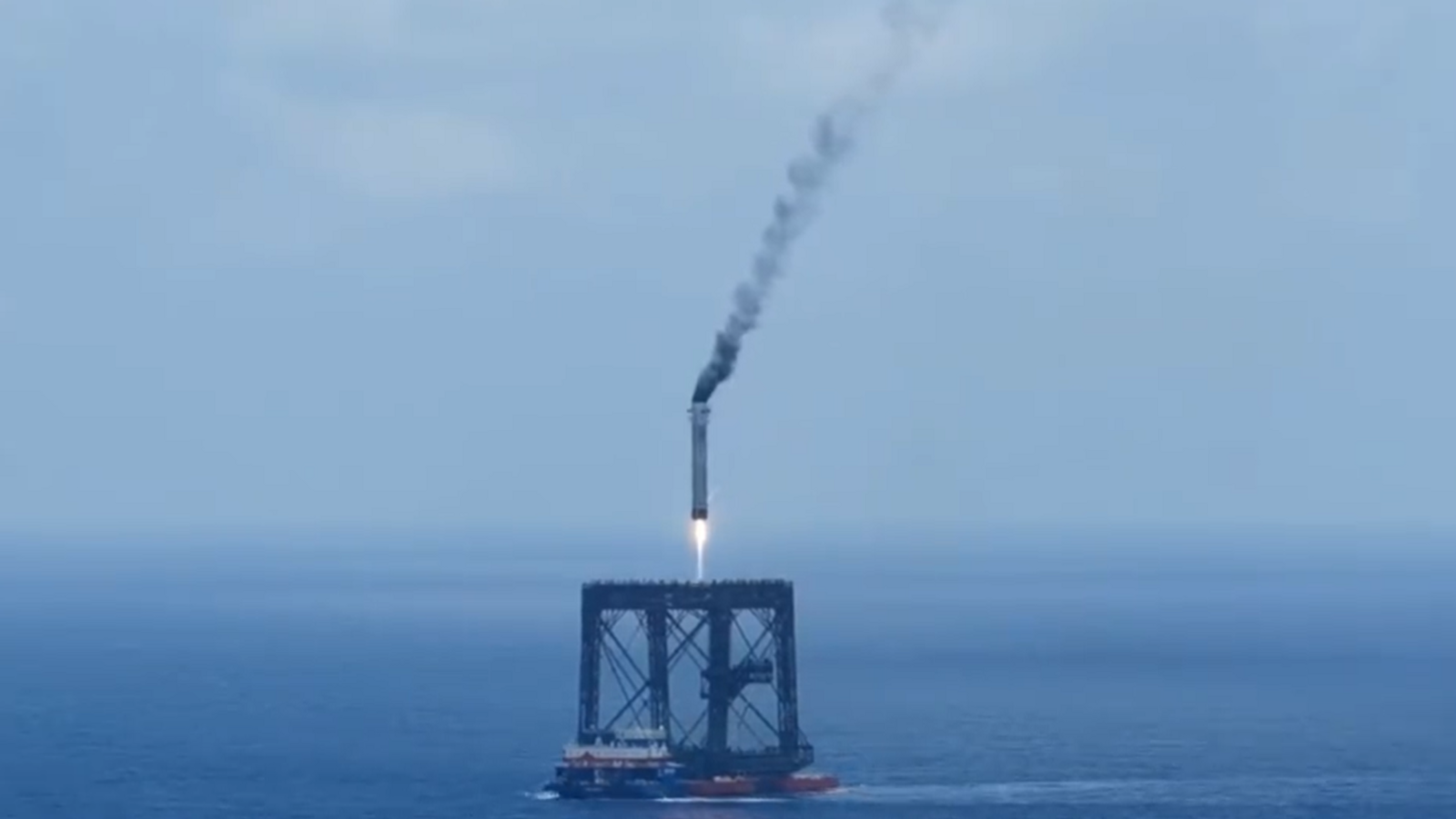
Chinese state media announced that the Long March 10B booster made a controlled vertical return and landed on a floating platform off the coast of Hainan. The landing, achieved a few minutes after stage separation, signals China’s progress in launch‑reusability, a technology that reduces satellite launch costs. This event could position China to compete with SpaceX and Blue Origin in the reusable rocket arena. Shares in Chinese space firms rose on the news, reflecting investor optimism.
China has successfully landed a reusable booster for the first time, announcing a breakthrough for the country’s space programme.
\The Long March 10B rocket lifted off from a site on Hainan island at 12:15 local time (04:15 GMT) on Friday. Almost six minutes after detaching from its upper stage, the booster descended vertically and was captured by a net attached to a floating platform.
\The event could position China to challenge America’s dominance in reusable launch vehicles, after SpaceX and Blue Origin have both achieved successful landings of their respective boosters. By re‑using boosters, launch costs can be dramatically reduced, potentially democratizing access to orbit.
\SpaceX first demonstrated a reusable Falcon 9 landing in December 2015, and Blue Origin followed with the New Glenn in November 2025. China’s Long March 10B, comparable to SpaceX’s Falcon 9, marks a significant step in Chinese rocket technology.
\Shares in China‑based aerospace firms rose after the announcement, with China Spacesat and China Satellite Communications each jumping close to the 10% daily limit. The story is being watched closely by global investors and space‑flight enthusiasts alike.
\