In brief
The Atacama Desert, known for its extreme aridity, is currently experiencing a rare phenomenon as over 200 species of wildflowers flourish due to record rainfall. This spectacular bloom, anticipated to last several weeks, transforms the landscape with colorful petals and draws attention to the events in this unique ecological region.
The Atacama desert in Chile sits long and lean, sandwiched between the Andes Mountains and the Pacific Ocean.
The desert's extreme aridity makes it one of the clearest places on Earth to view the night sky and is famous for being home to the largest radio telescope in the world.
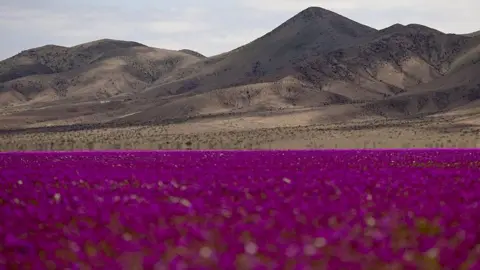
But the usually barren landscape has been transformed by a carpet of colourful wildflowers, which have been brought to life by significant rainfall during the southern hemisphere's winter months.
This is thought to be an event that only occurs every few years, when above average rainfall soaks the desert floor, causing dormant seeds to spring to life.
The Atacama desert typically receives less than 15mm of rain every year. But the area had more than 12mm of rain during August alone - most of which fell on just one day.
The desert even saw a rare blanket of snow back in June.
This magnificent bloom is made up of more than 200 different species of wildflowers, some of which do not grow anywhere else in the world. It typically occurs between the end of August and November.
Although thought of as rare, this phenomenon also occurred in 2024, following heavy rainfall in the area. This year's display will be at its peak for another few weeks, according to CONAF, Chile's National Forest Corporation.