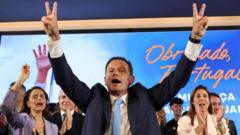
Portugal's governing right-of-centre party, the Democratic Alliance, has won snap elections for the third time in a row, yet has fallen short of securing an outright majority. Party leader Luís Montenegro addressed enthusiastic supporters in Lisbon, vowing to "stimulate investment" and ensure "prosperity and social justice" for all citizens.
The outcome proved disappointing for the Socialist Party under leader Pedro Nuno Santos, who has announced his resignation after the party found itself in second place. The Socialists lost numerous seats in the parliament, finishing neck-and-neck with the far-right Chega party—a relatively new player in the political scene. The final tallies could shift further, depending on the results from overseas voters, who previously leaned towards Chega in last year's elections.
Chega's leader, André Ventura, hailed his party's "historic" performance, claiming it signals an end to the two-party dominance that has characterized Portuguese politics for years. Ventura’s campaign focused on critical issues such as immigration and corruption, elements that gained added resonance in a political climate overshadowed by recent scandals involving the ruling prime minister.
In his speech after the election, Montenegro expressed gratitude towards his family and supporters for standing by him amid controversies concerning a company he founded prior to taking leadership of the party, currently owned by his sons. This scandal triggered the snap election after the government faced a vote of no confidence.
In a farewell statement, Santos reiterated his conviction that Montenegro is not fit to lead, hinting that the Socialist Party should continue addressing the underlying issues that led to the unrest within the country’s governance. As Portugal navigates the aftermath of this electoral shift, the implications for its political and social structures remain to be seen.