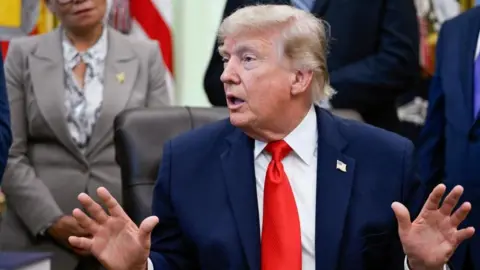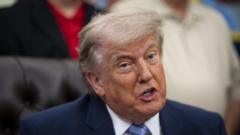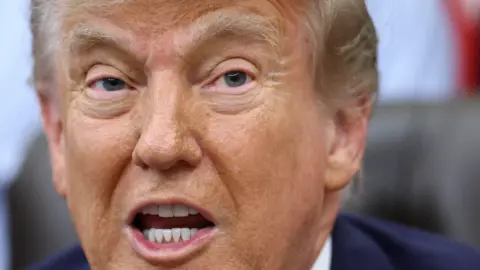
The relationship between Donald Trump and Volodymyr Zelensky has faced a significant downturn following a heated exchange in the Oval Office. Previously, Trump had disparaged Zelensky by labeling him a dictator and falsely asserting that Ukraine instigated the war, revealing a fraught dynamic that has now deteriorated further.
As tensions escalate, the alliance between the United States and Ukraine, cultivated under Joe Biden's administration, appears to be unraveling. This public dispute signals an impending crisis not only for Ukraine but also raises grave concerns among NATO's European members about the U.S.'s commitment to their security.
Among the prevailing anxieties is whether Trump would uphold the 1949 pledge made by Harry Truman, which treats an attack on a NATO ally as an attack on the U.S. itself. Such worries stem from Trump's apparent desire to mend ties with Russian President Vladimir Putin, leading to increased pressure on Ukraine and significant concessions expected from it.
While Trump's approach prioritizes appeasing Russia, the security of Ukraine—especially amidst its struggle for national survival—seems to be jeopardized. European leaders share these fears, uncertain of their own defenses if Ukraine cannot withstand pressure from Putin, who many believe would not honor any peace agreement.
During their latest meeting, Zelensky’s insistence on American security guarantees met with anger from Trump, culminating in a shouting match sparked by Vice-President JD Vance. The episode has led some observers to speculate that this public confrontation was orchestrated to either coerce Zelensky into compliance with U.S. demands or to create a pretext to blame him for any subsequent fallout.
Should Trump indeed follow up this breakdown in negotiations with a halt on military support, the question looms: how will Ukraine continue its resistance? The longevity and effectiveness of its struggle against Russian incursion would place renewed pressure on its European allies to respond and provide necessary assistance.