In a striking comparison to recent historical events, President Trump's recent announcement of broad tariffs has raised alarms reminiscent of Liz Truss’s tumultuous stint as Britain’s Prime Minister. Truss, who occupied her position for only 44 days in 2022, faced a swift exit after her radical tax cuts sparked market turmoil, leading to a dramatic fall in the British currency.
The situation unfolding now around Trump’s tariffs mirrors these circumstances. The financial markets are uneasy and warning signs echo the chaos witnessed during Truss’s administration. However, a critical distinction lies in the political systems of the U.S. and the U.K. Truss was compelled to reverse her economic policies rapidly due to pressure from both her party and parliament, ultimately leading to her resignation.
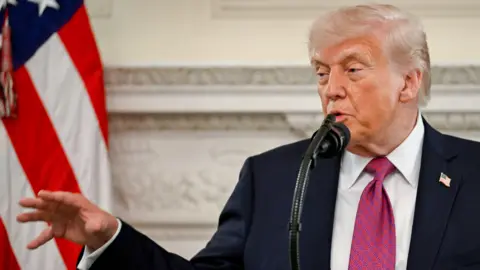
In contrast, Trump has demonstrated a commitment to maintaining his tariff policies despite rising concerns regarding their impact on the economy. Analysts observe that Trump's steady resolve starkly contrasts with Truss’s brief and tumultuous premiership, suggesting a difference in institutional flexibility and accountability. Jonathan Portes, an economist from Kings College London, noted the inherent challenges facing U.S. institutions in curbing potentially damaging policies, cautioning that failure to adapt could have global repercussions.
As the international community watches closely, the unfolding situation raises substantial questions about the capacity of U.S. political structures to respond to economic crises compared to other nations. The outcome remains uncertain, leaving a shared worry about the possible ramifications of Trump’s decisions on both the U.S. and the global economy.
The situation unfolding now around Trump’s tariffs mirrors these circumstances. The financial markets are uneasy and warning signs echo the chaos witnessed during Truss’s administration. However, a critical distinction lies in the political systems of the U.S. and the U.K. Truss was compelled to reverse her economic policies rapidly due to pressure from both her party and parliament, ultimately leading to her resignation.
In contrast, Trump has demonstrated a commitment to maintaining his tariff policies despite rising concerns regarding their impact on the economy. Analysts observe that Trump's steady resolve starkly contrasts with Truss’s brief and tumultuous premiership, suggesting a difference in institutional flexibility and accountability. Jonathan Portes, an economist from Kings College London, noted the inherent challenges facing U.S. institutions in curbing potentially damaging policies, cautioning that failure to adapt could have global repercussions.
As the international community watches closely, the unfolding situation raises substantial questions about the capacity of U.S. political structures to respond to economic crises compared to other nations. The outcome remains uncertain, leaving a shared worry about the possible ramifications of Trump’s decisions on both the U.S. and the global economy.