In brief
As the Trump administration enacts substantial cuts to national park staff, resulting in a significant reduction in public services and conservation efforts, the backlash from visitors and former employees intensifies, raising concerns about public safety and ecological preservation.
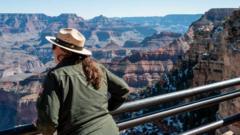
The Trump administration's sweeping cuts to staff at national parks, forests, and wildlife habitats have ignited a significant backlash as public access and conservation efforts in these cherished landscapes diminish. Visitors are noticing longer entrance lines, reduced hours at visitor centers, closed trails, and unsanitary facilities, raising concerns about their overall experience.Katherine White, a National Forest wilderness ranger from Washington, highlights the impact of these cuts on daily operations. Typically, her team removes over 600 pounds of litter from the Enchantments—a popular and sensitive alpine area that draws around 100,000 visitors annually. Staff are critical for maintaining backcountry sanitation facilities, which sometimes require helicopter services. Without adequate staffing, White fears the consequences could be detrimental to both the ecosystem and the visitor experience, especially during the high-traffic summer months.The mass layoffs, first revealed on February 14, have resulted in the departure of approximately 1,000 employees, or 5% of the National Park Service workforce. The U.S. Forest Service has suffered even greater losses, losing around 10%, which equals about 3,400 employees. This has disrupted management at parks that receive about 325 million visitors yearly while national forests host roughly 159 million visitors.The aftermath of the terminations has led to chaos as cars piled up outside the Grand Canyon National Park on President's Day weekend, unable to enter due to a shortage of staff for toll operations. Other parks are similarly struggling, with trail closures directly related to the staffing crisis. A Seattle trail closed just hours after the staff reductions were announced, informing visitors of the indefinite shutdown due to the loss of critical Forest Service employees.Protests have erupted in response to these cuts, exemplified by an incident at Yosemite National Park, where employees displayed an upside-down American flag during the "firefall" event, signaling their discontent with the administration's policies. Andria Townsend, a former biologist at Yosemite, voiced her support for the protest, emphasizing the dire situations of endangered species she worked to protect, which now face an uncertain future.Claire Thompson and Xander Demetrios, who dedicated nearly a decade to maintaining trails, expressed feelings of devaluation following their dismissals. They, along with many others, argue that the public's safety and environmental health are at stake due to insufficient staffing.In the wake of outrage from conservationists and concerned citizens, several national park employees have reportedly been rehired since the mass terminations on Valentine's Day. Interior Secretary Doug Burgum also pledged to hire over 5,000 seasonal workers for the upcoming summer. However, he noted the pressing need to address the nation's significant budget deficit.Outdoor advocates warn travelers planning visits to national parks should be prepared for numerous inconveniences such as litter, a lack of accommodations, and limited access to standard services. The National Parks Conservation Association (NPCA) has stated that if the administration does not reverse its course, visitors will need to adjust their expectations drastically.The effects of recent staff reductions are already palpable, with Yosemite terminating its only locksmith and other parks unable to repair hurricane damage. Moreover, as fire season approaches, experts are voicing concerns about the absence of forest service personnel who assist in wildfire safety. Dan Hilden, a wildland firefighter, expressed doubts about how critical tasks will be accomplished without sufficient staffing.As national parks face an uncertain future amid continued austerity measures, the union of conservation efforts and public safety remains a critical battleground for advocates and supporters alike.