In brief
The Léon Thévenin, a specialized ship, plays a key role in maintaining internet connectivity across African nations by repairing undersea cables, and its crew shares the emotional toll of their vital mission.
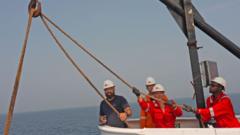
In the vast expanse of the African oceans, the football-field-sized Léon Thévenin stands sentinel, its crew of over 50 engineers and technicians dedicated to a mission that connects millions to the digital world. Having provided this essential service for over 13 years, the ship plays a critical role in averting internet blackouts, like the major disruptions witnessed last year when deep-sea internet cables were damaged, plunging cities from Lagos to Nairobi into digital darkness.Aboard the ship, cable jointer Shuru Arendse passionately asserts, “Because of me, countries stay connected,” highlighting the critical importance of their work in facilitating communications. The Léon Thévenin’s crew, driven by a shared sense of pride, faces the challenges of repairing undersea cables that are crucial for internet connectivity across the continent.Most internet data relies on a vast network of fibre-optic cables, running deep beneath the ocean to connect African nations to data servers throughout the world. Benjamin Smith, the vessel’s deputy chief of mission, explains, “As long as the servers aren’t in the country, you need a connection,” underscoring the dependency on well-maintained cables for online services.Despite the robust design of these undersea cables—expected to last for 25 years with minimal maintenance—they can easily be damaged by human activity such as fishing or anchoring, and natural disasters can also take a toll. The recent severing of key cables in the Red Sea resulted in widespread connectivity issues, while other breaks off the coast of West Africa left several countries grappling with extensive outages.To locate and repair faults, the Léon Thévenin’s crew uses advanced technology, such as remotely operated vehicles (ROVs) that can dive depths of over 5,000 meters to identify and sever damaged cable sections. Once located, they splice in new cables, a process akin to welding that can take up to 24 hours to complete, ensuring that minimal downtime is experienced by users.The crew faces challenges beyond the ocean’s depths; bureaucratic hurdles often delay their response to emergencies, with necessary permits creating waiting times that can stretch on. Yet, their commitment remains unwavering; on average, they spend six months each year at sea, separated from their families and personal lives. The emotional toll is evident, with crew members like chief steward Adrian Morgan missing multiple wedding anniversaries and maintenance fitter Noel Goeieman fearing he might miss his son’s wedding.Despite their sacrifices, there exists a supportive community among the crew, who engage in leisure activities during their downtime, reminding each other of the significant role they play as the vital link between Africa and the rest of the world. As the ship sails the African waters, its crew remains dedicated not just to their technical work, but to the people they serve. “We are the link between Africa and the world,” expresses chief engineer Ferron Hartzenberg, summing up the ship’s noble mission in safeguarding digital communication for the continent.