In brief
Despite a partial ceasefire agreement aimed at curbing attacks on energy infrastructure, Ukrainian drone manufacturers remain skeptical of Moscow's compliance. The advanced Raybird drone, capable of striking deep inside Russia, continues its testing amid fears of renewed hostilities.
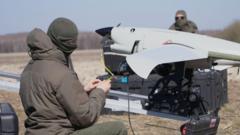
In a clandestine testing site far from the public eye, Ukrainian drone engineers are hard at work on a sophisticated long-range drone known as the Raybird. Resembling a miniature aircraft, the Raybird is launched with precision, boasting a remarkable flight endurance exceeding 20 hours and covering distances over 1,000 kilometers (approximately 620 miles). This drone is strategically designed to target crucial military assets including oil refineries and fuel storage deep within enemy territory.Recent developments saw Russia and Ukraine reach separate agreements with the United States on a partial ceasefire, which theoretically should halt such operations. This included a maritime ceasefire in the Black Sea as well as commitments to refrain from attacking each other's energy resources. Ukrainian President Volodymyr Zelensky announced the immediate implementation of these agreements.However, engineers like Oleksiy from Skyeton, the firm behind the Raybird, are doubtful of Russia's genuine adherence to the ceasefire. "The Russians punch you in the face, then the next day they make an agreement but ask to tie up your hands," he remarked, suggesting the ongoing risk of continued conflict.This situation could provide Russia with some reprieve, as Ukraine has reportedly conducted over 30 drone attacks on Russian oil facilities in recent months. The impacts of these strikes have been significant, leading to a decrease of around 10% in Russia's oil refining capacity.While Ukraine's defense technologies keep progressing, with new drones capable of reaching 3,000 km (1,860 miles) reportedly developed, and enhancements on existing missile systems applied, there's a prevailing concern that Russia’s attacks on Ukraine's energy infrastructure won't cease. Especially since, over the course of the war, Ukraine's ability to generate energy has seen drastic reductions, with past instances horrifyingly reducing its generation capacity to a mere third of that prior to conflict.Ukraine’s energy generation facilities remain a target of relentless strikes from Russian forces, aiming to cripple the country's gas production capabilities, crucial for its energy security. With gas storage levels abysmally low and the threat of winter approaching, maintaining fuel supplies becomes increasingly imperative.Back at the top-secret trial grounds, after successful operation tests, the Raybird lands safely. Yet, Oleksiy emphasizes that despite the ceasefire, the development of new weaponry must continue. "Our enemy just wants to have a break, gather its strength and attack again," he cautioned, indicating that vigilance is essential in this ongoing war.