In brief
Father Moses McPherson's church in Texas has seen a surge in converts, as disillusioned young men seek meaning and community through a faith that promotes a distinct vision of masculinity, steering away from modern societal norms.
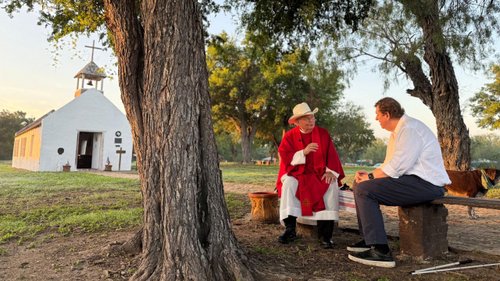
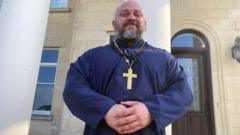
Young American Men Embrace Russian Orthodoxy's 'Hyper-Masculine' IdealsIn a surprising shift, young men across the United States are gravitating towards Russian Orthodoxy, captivated by its unique portrayal of masculinity. Father Moses McPherson, a priest at the Russian Orthodox Church Outside Russia (ROCOR) in Georgetown, Texas, has witnessed his congregation triple in size within 18 months. "A lot of people ask me: 'Father Moses, how can I increase my manliness to absurd levels?'" he states in a YouTube video that promotes an aggressive form of masculinity.The priest, a muscular figure and father of five, has a growing digital presence, showcasing his strength as he engages in weightlifting while heavy metal plays in the background. Formerly a Protestant and a roofer, McPherson now attracts a following of young men searching for purpose amid the complexities of modern American life.At his church, the Sunday liturgy often feels like a gathering of young men, many of whom express discontent with societal attitudes towards masculinity. Theodore, a software engineer and recent convert, shared that despite having a fulfilling job and a loving wife, he felt an emptiness inside. He highlighted societal disapproval of traditional male roles, claiming it contributes to feelings of inadequacy among men.Many of the church's men, like Theodore, are choosing to homeschool their children, adhering to beliefs that prioritize family and traditional gender roles. Archpriest Father John Whiteford explains that homeschooling provides a religious education while shielding children from progressive ideologies.Although Orthodox Christians make up only about one percent of the U.S. population, recent data indicates a notable male demographic increase within these faith communities. Research from the Pew Research Centre indicates that Orthodox Christians are now 64% male, a jump from 46% just 16 years ago, and anecdotal evidence suggests this trend is widespread.Amidst this shift, the digital landscape serves as a crucial catalyst for new followers. Father Moses's significant online reach, with his social media posts garnering thousands of likes, is part of a broader trend of male-led discussions that resonate particularly among converts searching for identity and belonging.Father Moses advocates that followers of Orthodoxy should live traditional family-centered lives by eschewing modern contraceptives and encouraging larger families. He criticizes Western religious services for being overly emotional and suggests they cater more to women, distancing men from spiritual engagement.Former Protestant Elissa Bjeletich Davis notes that many new converts hold views that often overlap with anti-progressive ideologies, contributing to peculiar interpretations of their faith. "It's almost as if the old American Puritans and their craziness is resurfacing," she remarks. Other converts like Buck Johnson, a tattooed firefighter, emphasized the welcoming nature of the community despite their differing appearances. He remarked on the negative American sentiment towards Russia, emphasizing the importance of spiritual and ideological alignment that many find in Orthodoxy.In stark contrast, the conservative leadership in Russia, such as Patriarch Kirill, is often met with skepticism from critics who associate it with geopolitical tensions. Nonetheless, some American converts appreciate Russia's stance on social issues and view it as a refuge from modern liberalism.As many young converts turn away from consumerism and instant gratification towards long-term commitments to family and faith, they find solidarity in a community that upholds traditional values and familial love, seeing Orthodoxy as a viable path forward in a confusing modern landscape.